Meet Patrick
Patrick created Tennis Fix System™ – an on- and off-court player development roadmap that utilizes data and analytics to drive improvement and success on the court.
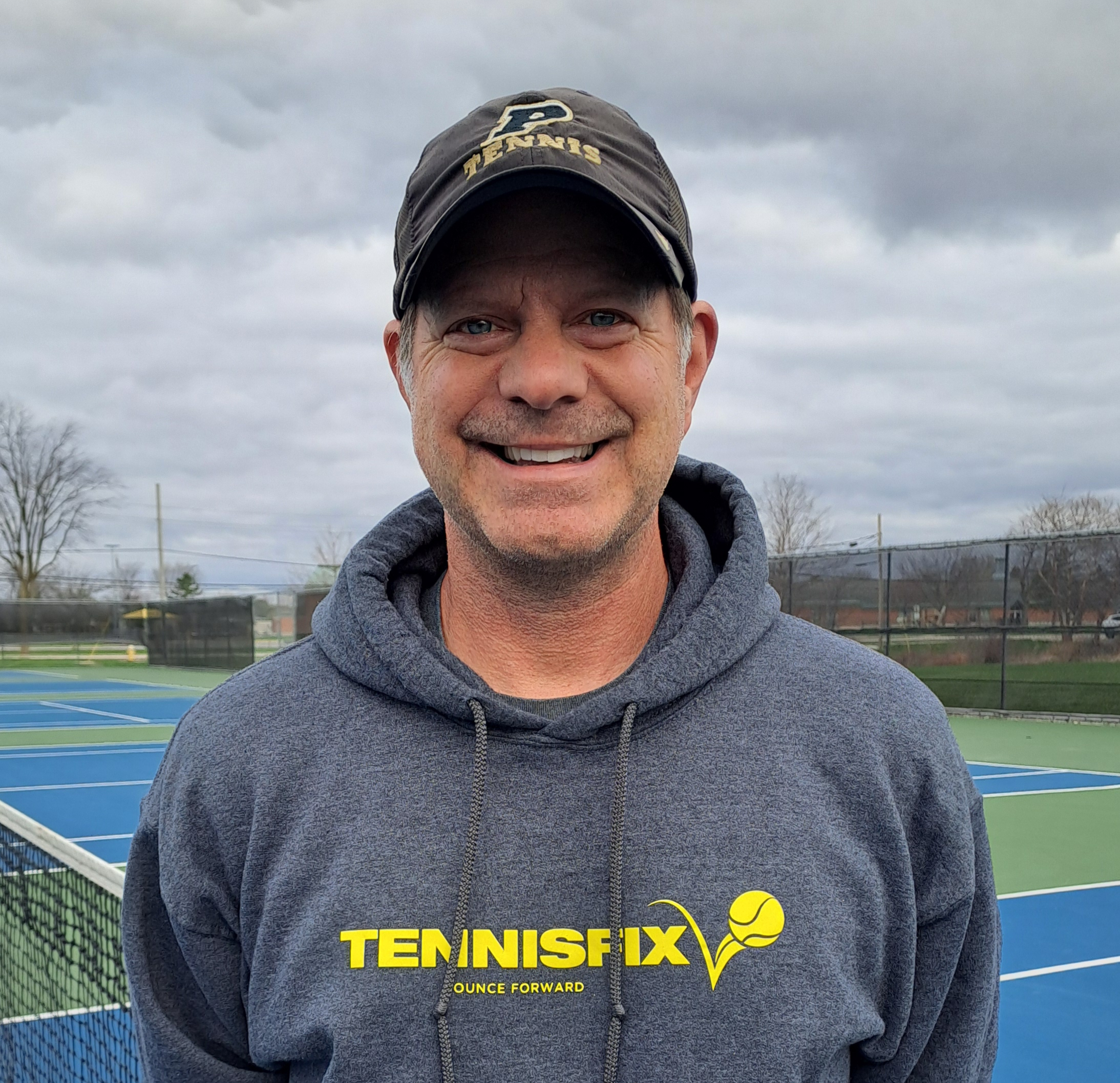
His passion for tennis is evident in the numerous ways he continues to give back to the sport. Patrick is not only a RSPTA Certified Tennis Instructor; he is also a USTA Certified Official. In addition to his digital consulting work as founder of Toledo SEO for Growth, Patrick also serves as the Secretary and Webmaster of the Ohio Tennis Coaches Association.
His commitment to excellence in tennis is evident in his dedication to improving his knowledge and broadening his expertise. Patrick holds a tennis technique analyst certification that allows him to use the latest technology to analyze a player’s tennis strokes through video technique analysis.
In addition, Patrick’s certification as a Pro Level 3 tennis match charting expert gives him the needed expertise to make accurate observations about each player’s performance during a match.
This information is recorded in real time and used to assess each player’s match tendencies, strengths, and weaknesses.
The Four Principles That Guide His Coaching
Every coach has drills.
Every coach has techniques.
What separates great coaches is the philosophy behind why they teach the way they do.
Successful player development isn’t about hitting more balls. It’s about developing better athletes, better competitors, and better decision-makers.
These four principles guide everything Patrick teaches, whether on the court, in the weight room, or sitting in a classroom discussing the mental side of the game.
1. Develop the Athlete Before Refining the Tennis Player
Technique matters.
But technique can only take a player as far as the body allows.
Tennis is a sport built on movement, balance, force production, deceleration, recovery, and repeatability. Before players can consistently execute under pressure, they must first learn to control their body.
That’s why movement, force control, coordination, and athletic development aren’t separate from tennis training. They are tennis training.
Strong movement creates better strokes, not the other way around.
2. Performance Begins Long Before the First Ball Is Hit
Some of the most important lessons in tennis happen away from the baseline.
Elite performers prepare differently. They understand routines, visualization, emotional regulation, recovery, decision-making, communication, and self-reflection.
Many of these skills can be developed more effectively off the court than during live play.
The goal isn’t simply to create better practice habits. It’s to develop competitors who know how to handle pressure when the match is on the line.
3. Learning Should Be Intentional, Not Just Repetitive
Hitting thousands of balls doesn’t automatically produce improvement.
Players improve when every drill, exercise, and conversation has a purpose.
Patrick believes in connecting movement, mental performance, decision-making, and technical instruction into one complete learning system. Every activity should help players understand not only what to do, but why they’re doing it.
The objective isn’t to win today’s drill.
The objective is to build skills that transfer to match play.
4. Great Coaching Leaves a Lasting Impact
Wins matter.
Development matters more.
Long after players forget the score of a particular match, they’ll remember how they learned to solve problems, lead teammates, handle adversity, and compete with confidence.
His goal isn’t simply to help players become better tennis players.
It’s to help them become more capable athletes, more resilient competitors, and more confident people.
Because the lessons learned through tennis should continue serving them long after their playing careers are over.
Learn more about Patrick’s tennis background and experience below:
- Head Boy’s Tennis Coach | Perrysburg High School
- Volunteer Assistant Coach | Bowling Green State University Women’s Tennis
- Board Member – Ohio Tennis Coaches Association
- USTA Official
- Certified Tennis Instructor – RSPA
- Certified Tennis Mental Performance Coach
- Tennis Performance Trainer™ – International Tennis Performance Association
- Tennis Serve Specialist Certification – Kovacs Institute