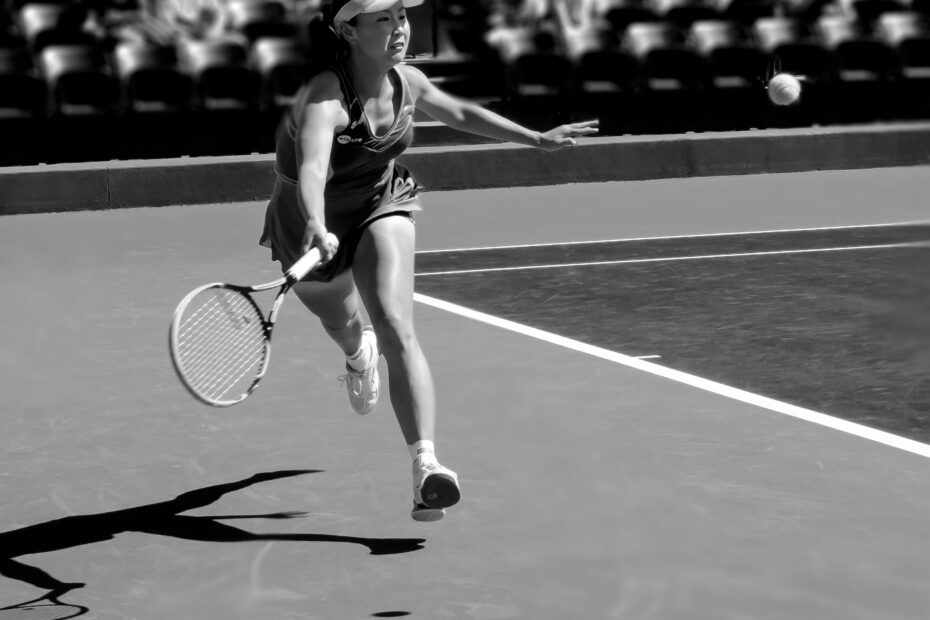
Many tennis players think they need to get faster.
Parents think their child needs to improve footwork.
Coaches often focus on movement drills, conditioning, or speed training.
Sometimes those things help.
But what if the problem isn’t speed at all?
What if the real issue is that the player can’t control their body once they start moving?
One of the concepts I’ve been exploring recently is something I call force control.
Simply put:
Force control is your ability to manage your bodyweight and momentum while moving.
The more I watch tennis, the more I become convinced that this skill separates good movers from great movers.
Tennis Isn’t Just About Getting to the Ball
Most players think movement is about getting from Point A to Point B as quickly as possible.
That’s only part of the equation.
Tennis requires players to:
- Accelerate
- Decelerate
- Change direction
- Recover
- Accelerate again
The player who can perform all of those actions under control gains a huge advantage.
Think about two players chasing a wide ball.
Both get there.
One arrives balanced and ready to hit.
The other arrives falling away, reaching, or off-balance.
Same speed.
Very different outcome.
The difference isn’t movement.
It’s movement control.
The Hidden Cost of Poor Force Control
Poor force control often shows up in ways players don’t recognize.
A player might say:
- “I always feel rushed.”
- “I’m late on everything.”
- “My timing is off.”
- “I can’t recover fast enough.”
The assumption is usually that they need quicker feet.
Maybe.
But often the real issue is that they struggle to control their momentum.
They take extra steps.
They overrun balls.
They lunge instead of loading.
They fall away from contact.
In other words, they spend most of the match trying to regain control.
That’s exhausting.
And tennis punishes inefficiency.
Watch What Happens After the Shot
Here’s a challenge.
The next time you watch a tennis match, don’t focus on the stroke.
Watch what happens immediately afterward.
Does the player recover quickly?
Do they regain balance?
Do they look organized and ready for the next ball?
Or do they need multiple adjustment steps?
Do they drift out of position?
Do they look like they’re constantly playing catch-up?
What happens between shots often determines what happens during the next shot.
A Simple Test
Try this.
Sprint five yards and stop at a cone.
Now ask yourself:
Are you immediately ready to move again?
Or do you need extra steps to slow down?
Do you remain balanced?
Or does your body continue moving after your feet stop?
Many players are surprised by what they discover.
Getting somewhere is easy.
Getting there under control is much harder.
That’s where performance lives.
The Best Movers Aren’t Always the Fastest
We’ve all seen it.
One player looks explosive.
Another doesn’t appear particularly fast.
Yet the second player seems to get to every ball and always appears in control.
Why?
Because they manage their bodyweight and momentum more effectively.
They waste less movement.
They recover more efficiently.
They arrive in better positions.
The game looks slower because they stay organized while everyone else is scrambling.
The Question That Changes Everything
Most players spend years trying to control the ball.
The best players learn to control themselves first.
The ability to manage your bodyweight and momentum while moving may not sound exciting.
But it influences nearly every aspect of tennis performance.
The next time you feel rushed, late, or out of position, don’t immediately assume you need more speed.
Ask a different question:
Am I struggling to move, or am I struggling to control my movement?
The answer may change how you think about tennis forever.
Ready to Build Balance and Unstoppable First-Step Speed?
Reserve Your Spot
Complete the registration form below to request your spot.
Registration is limited and placement will be confirmed after follow-up communication and payment instructions.