PART I – THE STORY
Sometimes the Best Ideas Begin with the Wrong Question.
When I first discovered the INTENNSE format, I wasn’t searching for a better way to coach tennis. I wasn’t trying to reinvent summer competition. I wasn’t looking to write a playbook.
I was simply looking for a fundraiser for the Perrysburg High School boy’s tennis team.
Like many high school coaches, I wanted to create an event that would support our tennis program while giving players something enjoyable to participate in during the summer.
What I didn’t realize at the time was that this tournament would become one of the most enjoyable experiences I’ve had around tennis.
Over the months leading up to our inaugural event, I created landing pages, registration forms, emails, score sheets, officials’ guides, schedules, and marketing materials. I worried about recruiting teams, assigning officials, managing scores, and staying on schedule.
Those things all mattered.
But after the tournament ended, I realized they weren’t the reason people kept talking.
Players talked about the atmosphere.
Parents talked about the energy.
Coaches talked about the strategy.
Officials talked about how much fun they had.
The fundraiser had become something much bigger.
It became an experience.
This playbook isn’t intended to convince you that INTENNSE is the future of tennis.
Instead, it documents my experience adapting the format for junior/high school players and everything we learned along the way.
Some of my ideas worked exactly as planned.
Others didn’t.
Many of my biggest lessons came from mistakes I didn’t know I was making until tournament day.
My hope is that this guide helps you create an event that is even better than ours.
If you use this playbook to host your own tournament, I’d love to hear what worked, what you changed, and what your players learned.
Like any good coaching resource, this playbook should continue to evolve.
Introduction
Every section of this guide tries to answer two questions…
What did I do?
Why did it matter?
The first question is practical. The second question is where the real learning happens.
Throughout this playbook you’ll find timelines, checklists, schedules, score sheets, budgets, marketing ideas, and tournament forms.
Those resources are important.
But they aren’t the heart of this playbook.
The heart of this playbook is intentional coaching.
Every decision I made, from allowing creative team names to ending the day with cookies and a championship tennis ball, was made with one purpose:
Create an experience people would remember.
By the end of our inaugural tournament, I realized we hadn’t simply organized another event.
I had built something players wanted to be part of.
That realization changed the way I think about coaching, fundraising, and team culture.
Why INTENNSE?
Fast-paced. Team-based. Built for energy and competition.
The first time I watched the INTENNSE format, one thing immediately stood out.
It wasn’t trying to make tennis shorter.
It was trying to make tennis more engaging.
The pace was faster.
Coaches were involved.
Every point mattered.
Players stayed engaged.
Spectators always had something happening to watch.
I couldn’t stop thinking about what that might look like in a high school setting.
Could I create an event where teammates actually cheered throughout every match?
Could coaches actively coach instead of simply watching?
Could every point matter until the very end of the tournament?
Could I create something different without changing the essence of tennis?
The answer, I discovered, was yes.
But not by copying the professional format exactly.
Instead, I intentionally adapted it.
Every point counted as one point.
Officials focused on time and score rather than chair umpiring.
Players made their own line calls.
We kept one serve and no-let serves because they encouraged pace.
We added a minimum participation requirement for singles players to ensure everyone contributed.
The goal wasn’t to recreate INTENNSE.
The goal was to create an event that worked for high school players.
That distinction became one of the biggest lessons of the entire project.
Every point counts. Every player matters.
More Than a Fundraiser
When people ask me how the tournament went, I could tell them we raised money.
I could tell them four teams competed.
I could tell them we stayed on schedule.
Those things are all true.
But they miss the point.
The real success of the tournament couldn’t be measured on a spreadsheet.
It could be heard.
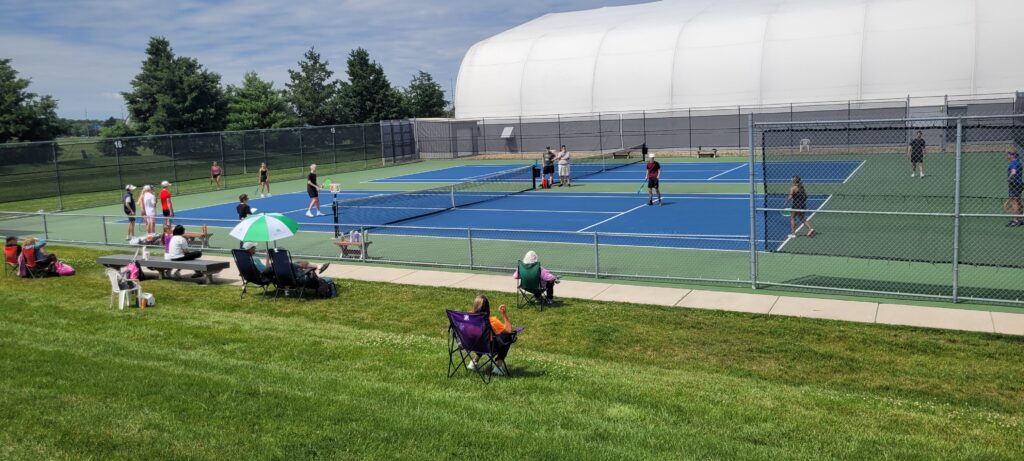
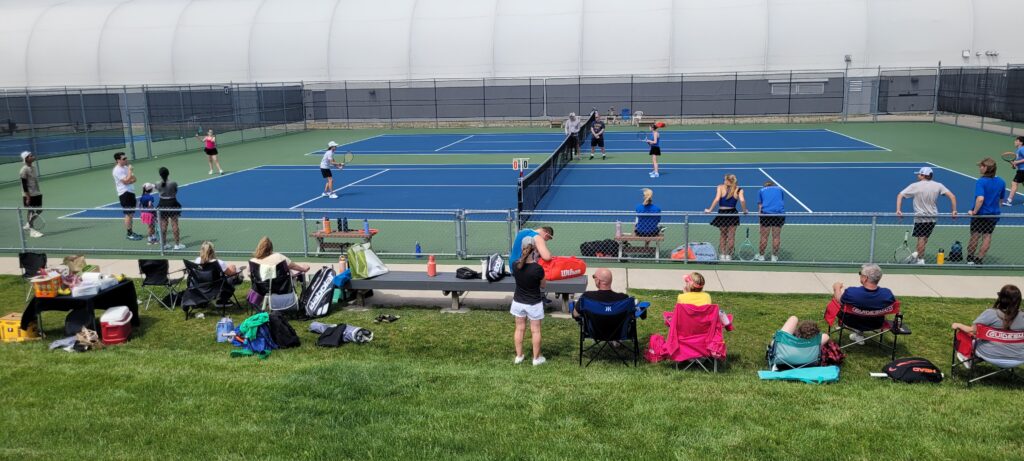
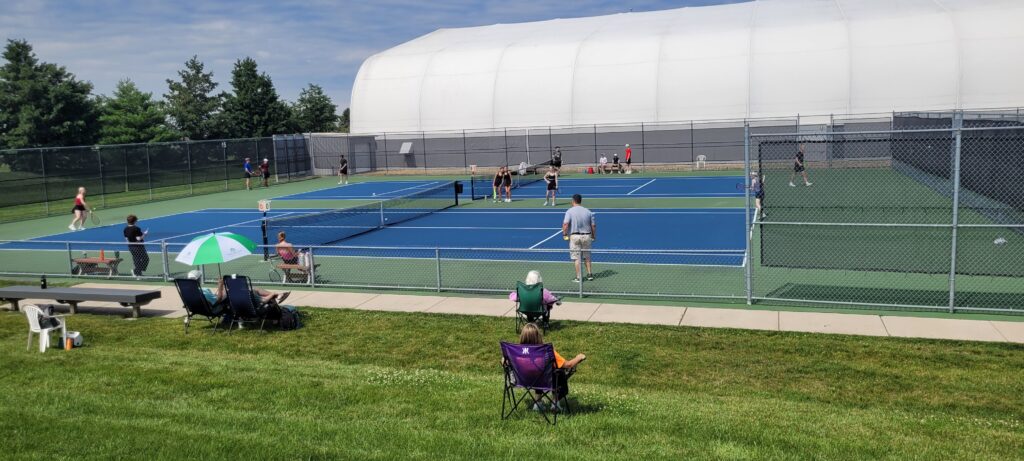
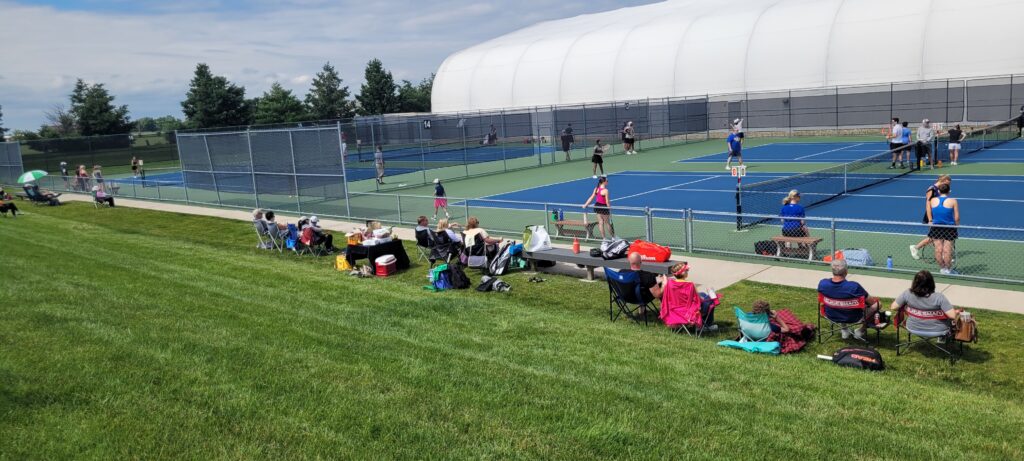
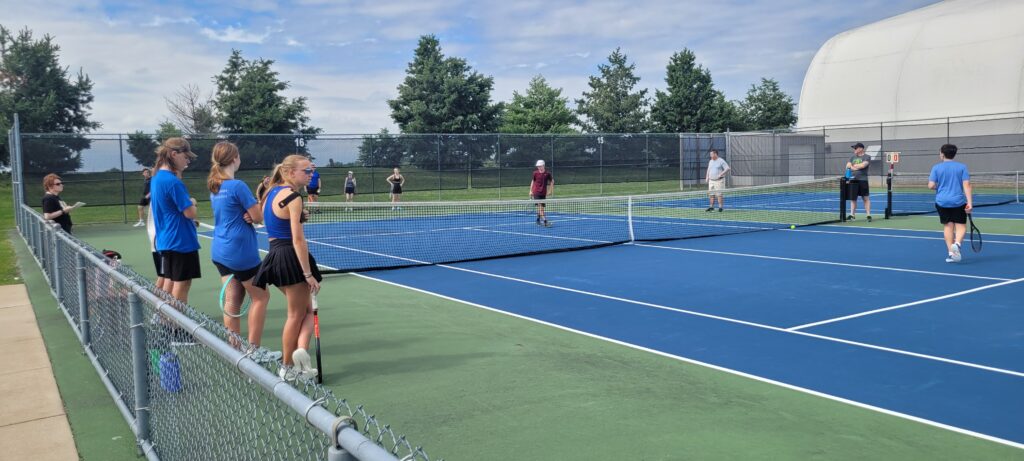
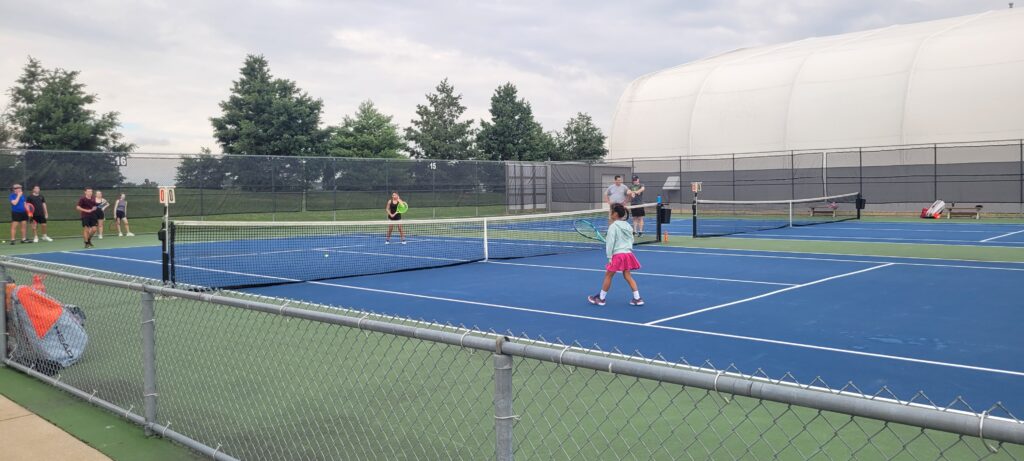
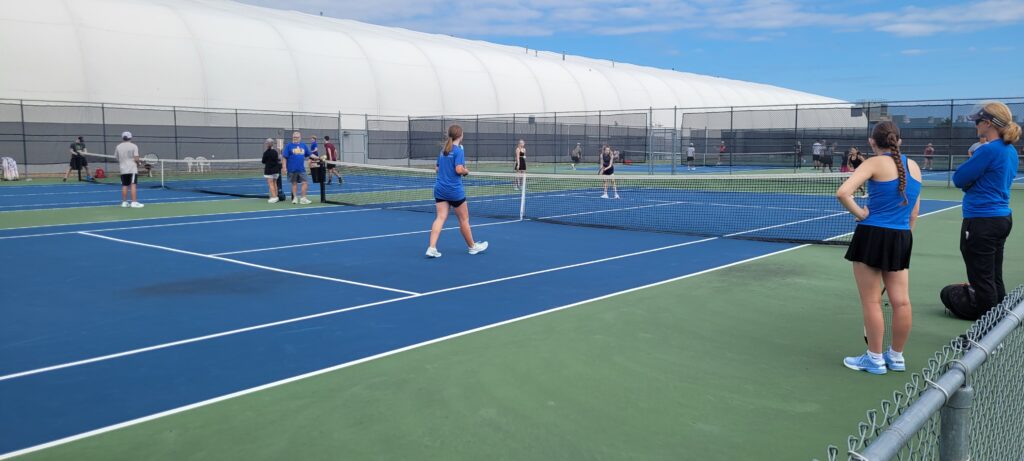
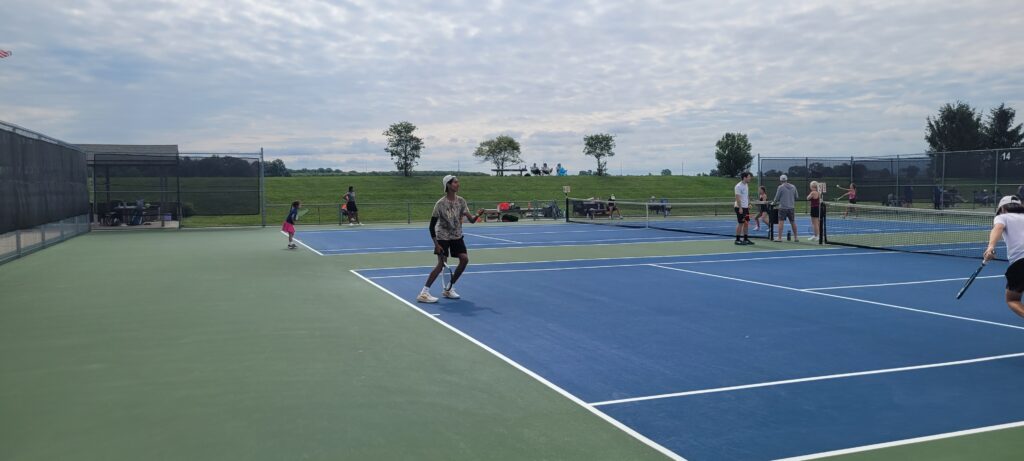
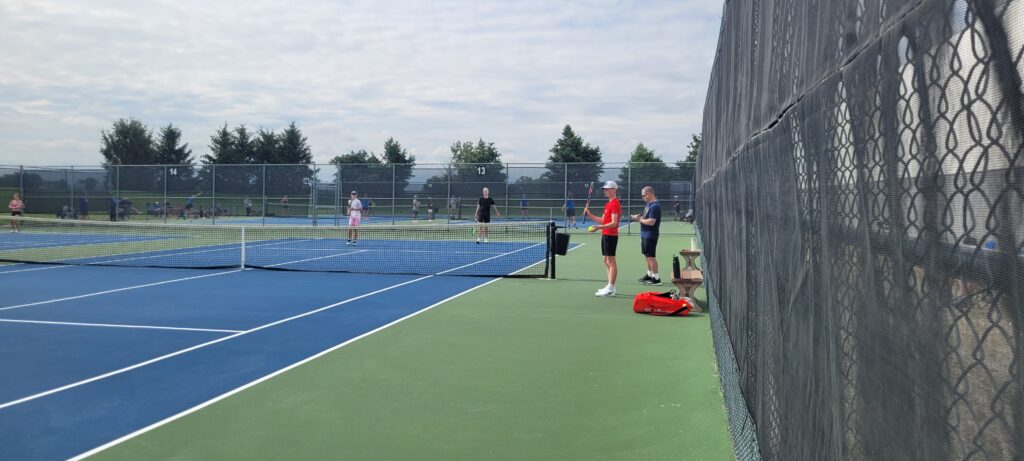
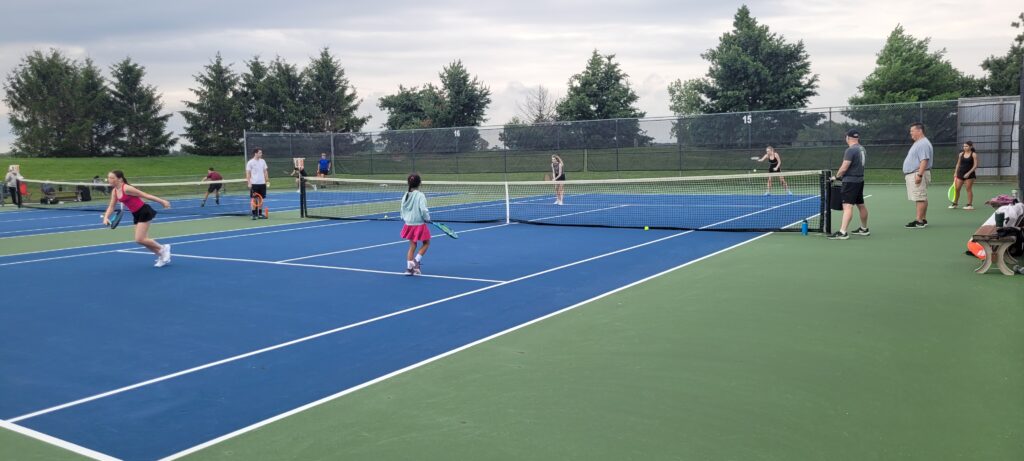
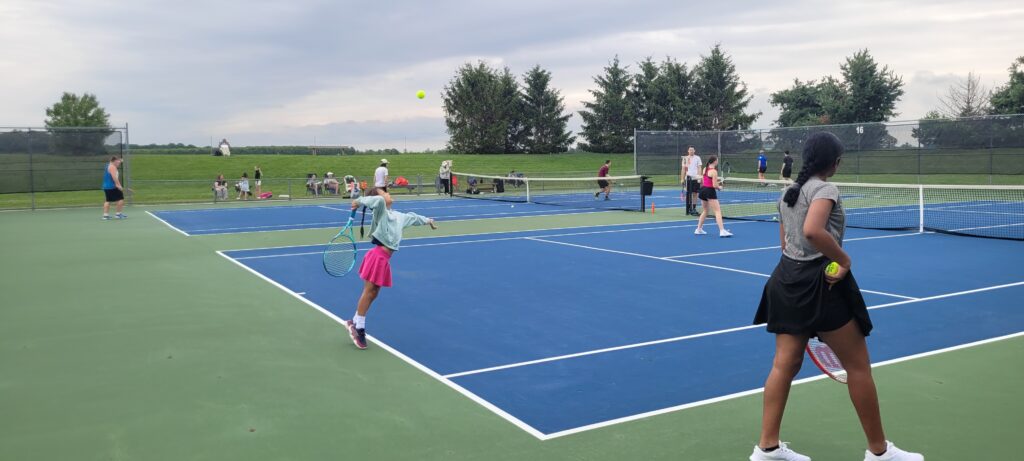
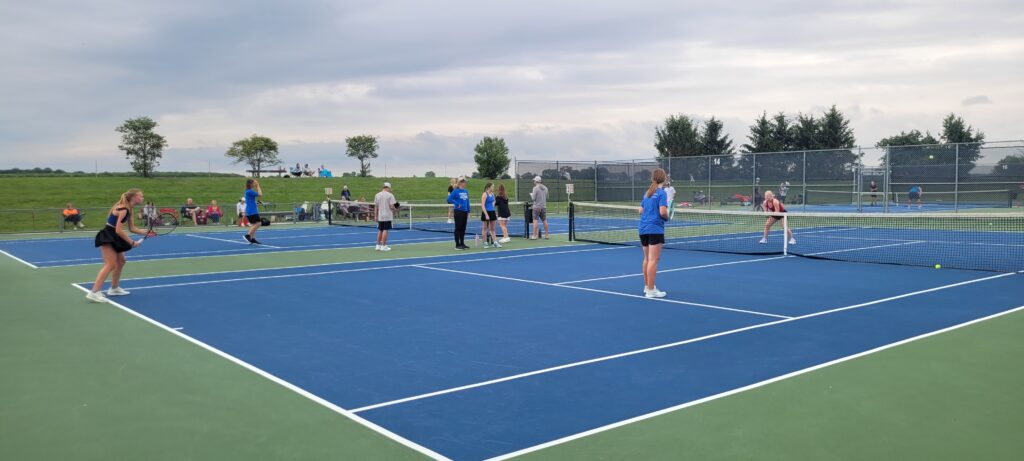
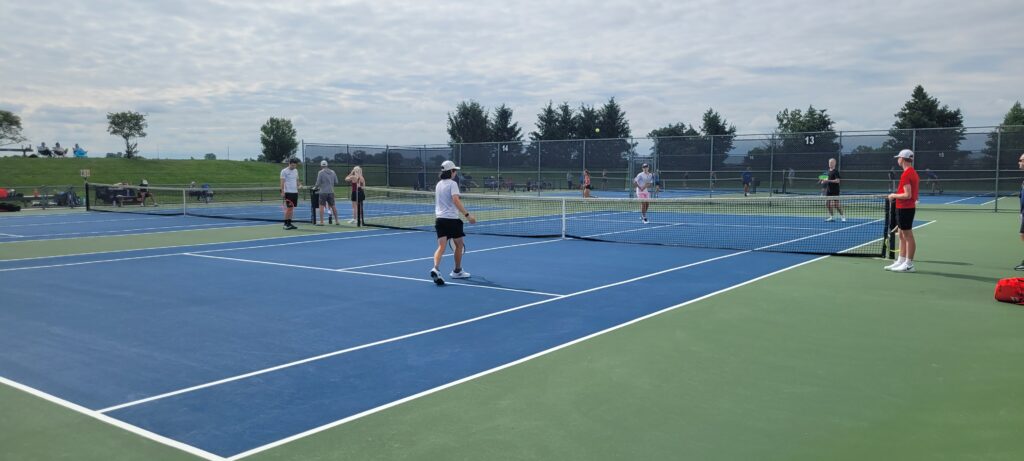
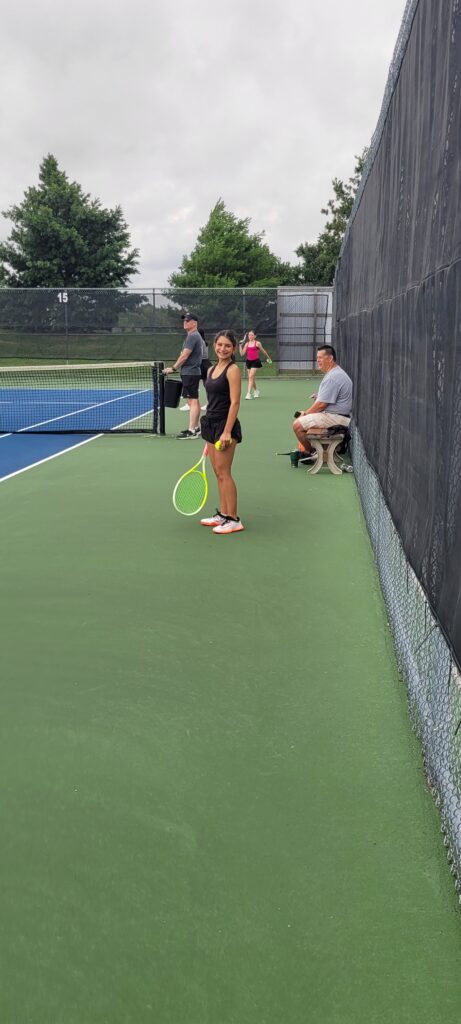
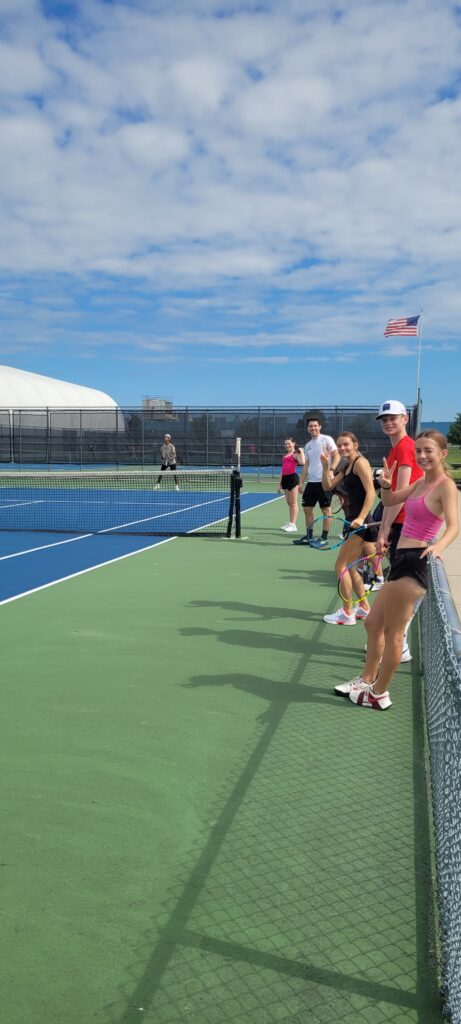
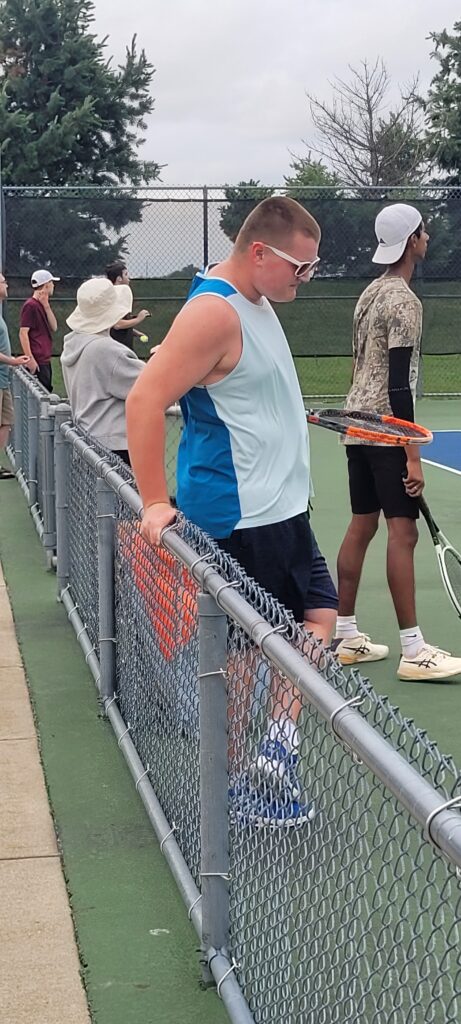
Four courts filled with cheering.
Coaches calling timeouts.
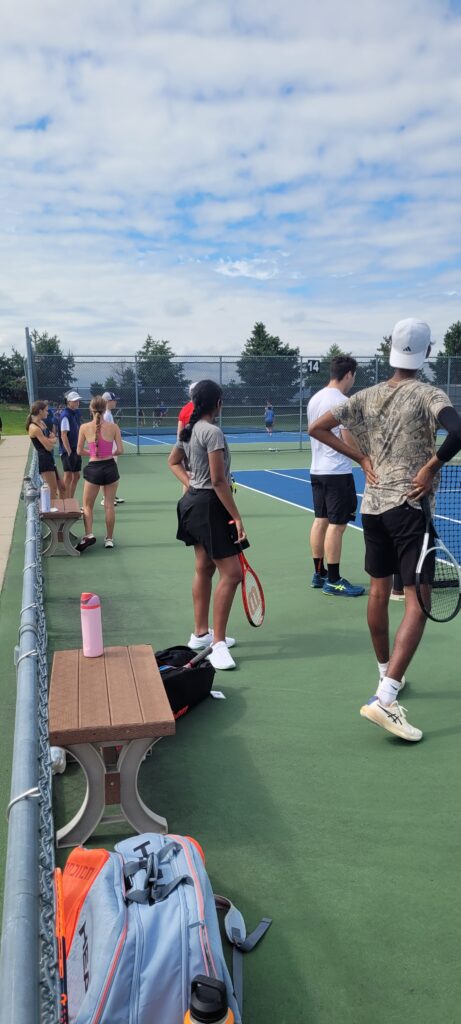
Players encouraging teammates.
Officials keeping the event moving.
Parents watching every BOLT.
Creative team names.
Friendly competition.
Positive sportsmanship.
When the final point ended, nobody rushed home.
Players stayed.
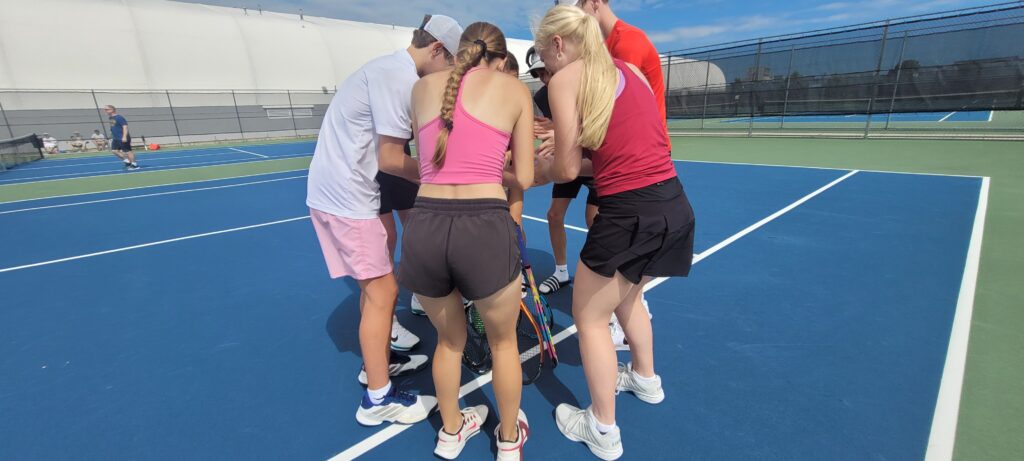
Teams gathered for pictures.
The championship team signed the inaugural oversized tennis ball.
Cookies and drinks were shared.
Conversations continued.
That wasn’t an accident.
It was the result of intentionally designing an experience rather than simply organizing a tournament.
Reflections
The biggest lesson I learned had nothing to do with tournament management.
It had everything to do with coaching.
The INTENNSE format reinforced many of the same lessons we try to teach every day.
The importance of making serves.
Recovering quickly from mistakes.
Managing emotions.
Competing for every point.
Supporting teammates.
Playing with energy.
Every one of those lessons transfers directly back to traditional tennis.
Perhaps that shouldn’t have surprised me.
Great coaching principles don’t change because the scoring system changes.
The format simply made those lessons impossible to ignore.
I also learned that players crave experiences.
Not just matches.
Not just trophies.
Experiences.
Looking back, I don’t think they’ll remember exactly how many points they scored.
I think they’ll remember the team names.
The cheering.
The strategy.
Signing the championship ball.
Taking pictures together.
Those are the moments that build culture.
What Surprised Me
Several things surprised me.
Players understood the format after just one BOLT.
Officials adapted more quickly than I expected.
Coaches embraced their expanded role.
Parents stayed engaged throughout the morning.
The top two teams finished only TWELVE points apart after nearly 700 points were scored.
Players stayed twenty to thirty minutes after the tournament simply to enjoy being together.
Most importantly, I discovered that I hadn’t created a fundraiser.
I’d created an environment.
The tournament format was only part of it.
The real success came from combining thoughtful planning, intentional coaching, positive culture, active coaching, enthusiastic teammates, dedicated officials, simple traditions, and a willingness to try something different.
That’s the lesson I’ll carry into every event I organize moving forward.
And I hope it’s the lesson you’ll carry into yours.
PART II – THE BLUEPRINT
Every Great Tournament Begins Long Before the First Serve.
When people remember a successful event, they usually remember tournament day.
They remember the matches, the cheering, the awards, the laughter, and the atmosphere.
They don’t remember the dozens of decisions made weeks beforehand that allowed the day to unfold naturally.
Looking back, I realized something important.
Tournament day wasn’t where the work happened.
Tournament day was where all the preparation paid off.
Every successful event is built twice.
First on paper.
Then on the courts.
That’s exactly how I approached our inaugural Yellow Jacket INTENNSE Team Tournament.
Instead of asking, “How do we run an INTENNSE tournament?” I asked a different question:
“How do we create an experience that players, coaches, parents, officials, and spectators will remember?”
That single question influenced nearly every decision I made.
Keep Year One Simple
One of the best decisions I made was intentionally limiting the tournament to four teams.
Could we have invited six?
Probably.
Eight?
Maybe.
Should we have?
Absolutely not.
As coaches, we often fall into the trap of believing bigger automatically means better.
In reality, bigger usually means more complicated.
Year One wasn’t about maximizing revenue.
It was about maximizing the experience.
Four teams meant:
- Every team played every other team.
- Four courts stayed busy all morning.
- Officials became comfortable with the format.
- Coaches stayed engaged.
- Tournament administration remained manageable.
- We had enough flexibility to solve problems without everything falling apart.
Most importantly, it gave us an opportunity to learn.
By intentionally starting small, I was able to identify dozens of improvements that will make Year Two significantly better.
That’s exactly what a successful pilot event should accomplish.
My Philosophy
As planning progressed, I found myself using one question over and over.
Does this decision improve the experience?
If the answer was yes, I kept it.
If the answer was no, I simplified it.
That philosophy explains nearly every decision you’ll read throughout this playbook.
For example:
- We chose creative team names because they build identity.
- We encouraged active coaching because players benefit from strategic conversations.
- We simplified officiating because I wanted volunteers to feel confident.
- I used an oversized championship tennis ball instead of an expensive trophy because traditions create memories.
- I ended with refreshments because relationships don’t stop when the final point is played.
None of those ideas affected the tennis itself.
All of them improved the experience.
The Blueprint at a Glance
The tournament was organized around six planning phases.
|
Phase |
Primary Objective |
|
Planning |
Reserve courts, determine format, establish pricing and timeline |
|
Recruiting |
Secure four teams and recruit officials |
|
Marketing |
Build awareness and simplify registration |
|
Preparation |
Finalize schedules, guides, score sheets, supplies and assignments |
| Tournament Day |
Execute the event while focusing on people, not paperwork |
|
Debrief |
Document lessons learned while they are still fresh |
Each phase builds upon the previous one.
Trying to skip steps almost always creates unnecessary stress later.
What Success Looked Like
Before the event, I thought success meant raising money for our tennis program.
By the end of the tournament, my definition had completely changed.
Success became:
Players staying twenty to thirty minutes after the tournament because they didn’t want to leave.
Parents telling us how much fun they had watching.
Officials asking if they could help again next year.
Coaches embracing the format and actively strategizing throughout the morning.
Players discovering that every point really does matter.
The fundraiser mattered.
But the experience mattered more.
That realization shaped the remainder of this playbook.
As you read the following chapters, you’ll certainly find timelines, checklists, budgets, score sheets, and planning documents.
Those resources are important.
But they aren’t the reason the tournament succeeded.
The reason it succeeded was because every logistical decision supported a larger purpose:
Creating an unforgettable experience.
Year One Reality Check
When I first began planning this event, I assumed tournament day would be the most difficult part.
It wasn’t.
Recruiting teams, preparing materials, organizing officials, creating score sheets, writing guides, building the landing page, and thinking through every detail required far more time than the actual four-hour event itself.
By the time the first serve was hit at 8:30 a.m., nearly all of the important work had already been completed.
Tournament day became the reward for weeks of thoughtful preparation.
Coach’s Notebook
Before moving on to the planning timeline, take a few minutes to answer these questions.
- What kind of experience do you want those involved to remember?
- If someone described your event one year from now, what would you hope they say?
- Which decisions will improve the experience, even if they require a little more planning?
Those answers should guide every decision you make.
Because in the end, people rarely remember the logistics.
They remember how your event made them feel.
And that’s where great tournaments begin.
PART III – THE TOOLKIT
The Resources That Turn an Idea Into a Tournament.
Why a Toolkit?
One of the biggest surprises from our inaugural tournament had nothing to do with tennis.
It had everything to do with paperwork.
Before tournament day, I spent dozens of hours creating schedules, score sheets, officials’ guides, landing pages, registration forms, emails, court assignments, and checklists.
Most of those documents didn’t exist.
I built them from scratch.
Looking back, I realized something.
No coach should have to reinvent the wheel.
The purpose of this Toolkit is to eliminate that work.
Every document included in this section was either used during our inaugural tournament or created immediately afterward because we wished we had it.
Some worked exactly as planned.
Others were improved after tournament day.
Several didn’t even exist until we discovered a need for them while running the event.
That’s exactly how good systems are built.
Not through theory.
Through experience.
My hope is that these resources save you time while giving you the freedom to focus on what really matters:
Creating an unforgettable experience for your players.
How to Use This Toolkit
Don’t feel like you need to use every document.
Every school is different.
Every facility is different.
Every coaching staff is different.
Think of these resources as starting points.
Customize them.
Cross things out.
Add notes.
Rewrite them.
The best tournament director’s binder is one that reflects your own program.
After every tournament, I recommend spending fifteen minutes updating every document while the experience is still fresh.
Over time, your toolkit becomes one of the most valuable coaching resources you own.
ASSET 1 – TOURNAMENT DIRECTOR CHECKLIST
The Tournament Director wears more hats than anyone else.
Before the tournament begins, you’re the marketer.
You’re the event planner.
You’re the scheduler.
You’re the fundraiser.
On tournament day, you’re the host, problem solver, scorekeeper, and cheerleader.
Trying to remember everything is impossible.
That’s why the Tournament Director Checklist became the most important document in our binder.
Rather than wondering what still needed to be done, I simply worked down the list.
CLICK FOR THE TOURNAMENT DIRECTOR CHECKLIST
ASSET 2 – 8-WEEK PLANNING TIMELINE
One of the biggest mistakes tournament directors make is waiting too long.
The earlier you complete major decisions, the more enjoyable tournament week becomes.
CLICK FOR THE 8-WEEK PLANNING TIMELINE
ASSET 3 – MARKETING TOOLKIT
One of the unexpected lessons from Year One was that marketing the tournament required more effort than running it.
Fortunately, every piece of marketing you create this year becomes next year’s starting point.
CLICK FOR THE MARKETING TOOLKIT
Lesson Learned
Save everything.
Next year’s tournament will practically market itself.
ASSET 4 – TEAM INFORMATION PACKET
Every coach should receive a packet approximately one week before the event.
It should answer every question before they need to ask it.
CLICK FOR THE TEAM INFORMATION PACKET
ASSET 5 – OFFICIALS GUIDE
Originally, I assumed officials would simply keep score.
In reality, they became the heartbeat of the tournament.
Their responsibilities include:
Keeping time
Keeping score
Managing timeouts
Keeping matches moving
Maintaining the pace
Providing consistency
CLICK FOR THE OFFICIALS GUIDE
Biggest Improvement for Year Two
Officials should calculate running totals immediately after every BOLT.
Waiting until the tournament ended slowed the awards ceremony unnecessarily.
ASSET 6 – THE SCOREKEEPING SYSTEM
If I could improve only one operational area, this would be it.
Every official should receive an Official BOLT Score Sheet.
After every BOLT:
Record Team A points.
Record Team B points.
Record Team C points.
Record Tean D points.
Update the running total.
Verify the math.
Move on.
At the conclusion of every dual, simply report the totals to Tournament Headquarters.
No scrambling. No calculators. No uncertainty.
CLICK FOR THE BOLT SCORE SHEET
ASSET 7 – BUDGET WORKSHEET
One lesson became very clear.
Memories don’t have to be expensive.
Year One expenses included…
Refreshments – Approximately $21
Oversized Championship Tennis Ball – $10
Outdoor court rental (4 courts for 4 hours each) – $160
That’s it.
Players didn’t ask where the trophies were.
They were excited to sign the championship ball.
Sometimes the simplest ideas become the most memorable traditions.
CLICK FOR THE BUDGET WORKSHEET
Lessons Learned
- Keep expenses low.
- Spend money on experiences, not expensive awards.
- A $10 oversized championship tennis ball created more excitement than a traditional trophy likely would have.
- Simple refreshments encouraged players, coaches, officials, and families to stay after the tournament, strengthening the sense of community.
ASSET 8 – TOURNAMENT DEBRIEF
Complete this within forty-eight hours.
Not next week.
Not next month.
CLICK FOR THE TOURNAMENT DEBRIEF WORKSHEET
Final Thoughts
An INTENNSE team tournament lasts one morning.
A good team tournament becomes an annual tradition.
A great INTENNSE tournament becomes part of your program’s identity.
That doesn’t happen because of a unique scoring format.
It happens because of intentional planning, thoughtful leadership, and a commitment to creating an experience people genuinely want to be part of.
If this Toolkit helps another coach launch a tournament, create a new tradition, or simply bring more people together around the sport of tennis, then it has accomplished exactly what I hoped it would.
PART IV – BEYOND THE TOURNAMENT
Lessons That Extend Far Beyond One Morning of Tennis.
One of the first comments I heard after the tournament was something I hadn’t expected.
You really can’t take any points off.
Exactly.
In traditional tennis, players often think in terms of games and sets.
Lose one point?
No big deal.
You’ll get another.
INTENNSE changes that mindset.
Every point contributes directly to the team score.
Suddenly…
Faults matter.
Free points matter.
Making one extra first serve matters.
Choosing a higher percentage target matters.
Recovering after an error matters.
The scoring format simply makes visible what has always been true.
Every point has always mattered.
The tournament didn’t create that lesson.
It revealed it.
Coach’s Reflection
How often do we tell players that every point matters?
How often do we create environments where they actually experience it?
Team Tennis Is Different
One of my favorite moments from the tournament wasn’t a spectacular shot.
It was looking around and realizing every court had teammates cheering.
Tennis is usually an individual sport.
This wasn’t.
Players encouraged each other.
Coaches discussed strategy.
Substitutes stayed engaged.
Parents watched every court.
Officials became part of the experience.
It reminded me that while tennis is played one point at a time, it doesn’t have to be experienced alone.
Lesson Learned
Positive cheering changes everything.
The loudest teams weren’t disrespectful.
They were supportive.
There is a difference.
That distinction matters.
Great Events Don’t Just Happen
Looking back, none of the best moments were accidental.
The championship ball.
The cookies.
The SunnyD.
Creative team names.
Pictures afterward.
The welcome meeting.
The awards ceremony.
Every one of those moments was planned.
That’s an important lesson.
Culture isn’t created by chance.
It’s designed.
Coach’s Tip
Don’t ask:
“How do I run a tournament?”
Ask:
“What experience do I want people to remember?”
The Best Lessons Came from the Mistakes
Every first-year event has imperfections.
This one certainly did.
Recruiting teams took longer than expected.
Officials needed a better scoring system.
We should have collected team names earlier.
One minute between BOLTs wasn’t enough.
Officials should calculate totals after every BOLT.
None of those things represent failure.
They represent learning.
One of my goals in writing this playbook is to help other coaches avoid making the same mistakes.
That’s why they’re included.
Year Two Improvements
- Earlier roster deadline
- Earlier team-name deadline
- Refined official score sheets
- Expanded marketing timeline
- Better volunteer assignments
Every improvement began as a lesson.
10 Lessons Every Coach Can Apply Tomorrow
Not every coach reading this book will host an INTENNSE tournament.
That’s okay.
I hope every coach still takes something away from it.
Here are ten lessons that apply to every program.
- Experiences are remembered longer than results.
- Players enjoy belonging to something bigger than themselves.
- Coaches matter more than they sometimes realize.
- Simple traditions often become the most meaningful.
- Learning by doing beats lengthy explanations.
- Positive energy is contagious.
- Good planning creates relaxed tournament days.
- Every point really does matter.
- Reflection is part of coaching.
- Don’t be afraid to try something new.
Final Reflection
When I first began planning this tournament, I thought I was organizing a fundraiser.
I wasn’t.
I was creating an experience.
Looking back, I don’t think anyone will remember exactly how many points their team scored.
I don’t think they’ll remember the schedule.
Or the score sheets.
Or the landing page.
I think they’ll remember laughing with teammates.
Signing the championship ball.
The cheering.
The strategy discussions.
The cookies after the tournament.
The pictures.
The atmosphere.
Those are the things that build culture.
Those are the things that players remember years later.
If this playbook encourages even one coach to create an event that brings people together, strengthens a program, and reminds players why they love this sport, then every hour spent organizing our inaugural tournament will have been worth it.
Because in the end…
This was never just about raising money.
It was about creating something worth coming back to.
Questions We Got Asked
What is an INTENNSE Team Tennis Tournament?
An INTENNSE Team Tennis Tournament is a fast-paced, team-based tennis competition that emphasizes continuous play, coaching, substitutions, and cumulative scoring. Instead of traditional sets, players compete in timed 10-minute “BOLTs,” with every point contributing to their team’s overall score. The format creates a high-energy atmosphere where every point matters and teammates remain engaged throughout the event.
Can a high school successfully host an INTENNSE tournament?
Absolutely. Our inaugural Yellow Jacket INTENNSE Team Tournament demonstrated that the format adapts well to high school players. By simplifying a few rules and limiting the inaugural event to four teams, we created an exciting, well-organized tournament that players, coaches, officials, and parents all enjoyed.
How many courts do I need?
We recommend four courts for a four-team round-robin tournament. Four courts allow two dual matches to be played simultaneously while keeping the event on schedule. If fewer courts are available, the tournament can still be held, but the schedule will need to be adjusted.
How many players are on each team?
Each team consists of six players:
- Three boys
- Three girls
Teams compete in:
- Boys #1, #2 and #3 Singles
- Girls #1, #2 and #3 Singles
- Boys Doubles
- Girls Doubles
- Mixed Doubles
Coaches may substitute players throughout each BOLT while following any participation guidelines established for the tournament.
Do I need certified officials?
No.
One of the biggest lessons from our inaugural event was that experienced tennis volunteers, coaches, or parents can successfully serve as officials after receiving a brief orientation.
Their primary responsibilities are to:
- Keep time
- Keep score
- Manage timeouts
- Keep the tournament moving
Players continue making their own line calls, allowing officials to focus on tournament operations rather than chair umpiring.
Can the tournament be played indoors?
Yes.
The format works well both indoors and outdoors. Outdoor tournaments may choose to switch ends halfway through each BOLT to account for wind or sun. Indoor events generally do not require side changes, making tournament management even simpler.
How long does the tournament take?
Our inaugural tournament featured four teams competing in a round-robin format.
The schedule included:
- Player warm-up
- Welcome meeting
- Three dual matches
- Awards ceremony
- Team photos
- Refreshments
The event lasted approximately 3-1/2 to 4 hours from arrival through the conclusion of the awards ceremony.
Is the tournament a good fundraiser?
Yes.
The event generated revenue while keeping expenses very low.
Our largest expenses were:
- Approximately $21 for refreshments
- $10 for an oversized championship tennis ball
- $160 for 4 outdoor courts for 4 hours
Beyond fundraising, the tournament also strengthened relationships among players, coaches, parents, and officials, creating value well beyond the financial results.
What did players enjoy most?
The biggest surprise was how quickly players embraced the format.
Many commented on:
- The fast pace
- Team atmosphere
- Active coaching
- Continuous action
- Support from teammates
- Every point counting toward the team’s score
Players also enjoyed celebrating together after the tournament with refreshments, team photos, and the championship ball signing.
What would you change for next year?
Every inaugural event provides opportunities for improvement.
Our top priorities for Year Two include:
- Creating a live master scoreboard
- Having officials total scores after every BOLT
- Collecting team names and rosters earlier
- Encouraging teams to use their timeouts more strategically
- Refining the official score sheets
- Continuing to build traditions around the tournament
Can this format work for middle school, club, or adult tennis?
Absolutely.
While our event was designed for high school players, the format is flexible enough for middle school teams, tennis clubs, USTA leagues, community organizations, and even adult social events. The structure can easily be modified based on age, ability level, and available court time.
Where can I download the tournament resources?
All of the resources used to organize our inaugural tournament are available throughout this guide, including:
- Tournament Director Checklist
- Eight-Week Planning Timeline
- Official BOLT Score Sheet
- Master Tournament Scoreboard
- Officials Guide
- Team Information Packet
- Budget Worksheet
- Tournament Debrief Worksheet
These templates are designed to be customized for your own program and continue evolving each year.
Why did you call the playbook “More Than a Fundraiser”?
Because that’s exactly what the tournament became.
We set out to raise money for our tennis program. By the end of the day, we had certainly accomplished that, but we had also created something much more meaningful. Players formed stronger connections, coaches became active participants throughout the competition, parents stayed to celebrate, and a new tradition was born.
The biggest lesson from Year One wasn’t about fundraising.
It was that thoughtfully designed experiences can strengthen a tennis program in ways that last far beyond a single day or a single balance sheet.
This Was Year One.
The best traditions all begin the same way.
Someone decides to try something new.
-
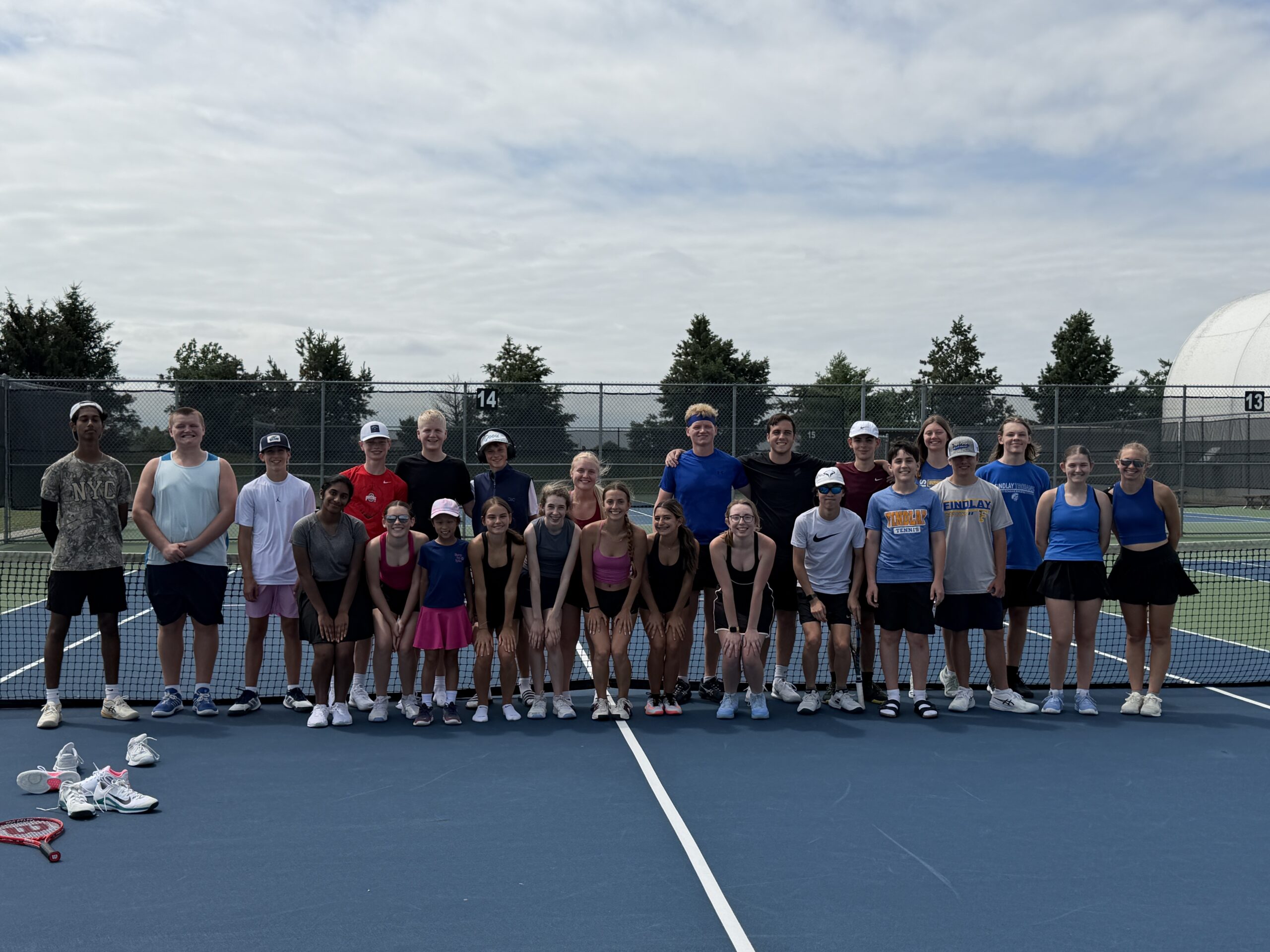
- All participants!
-
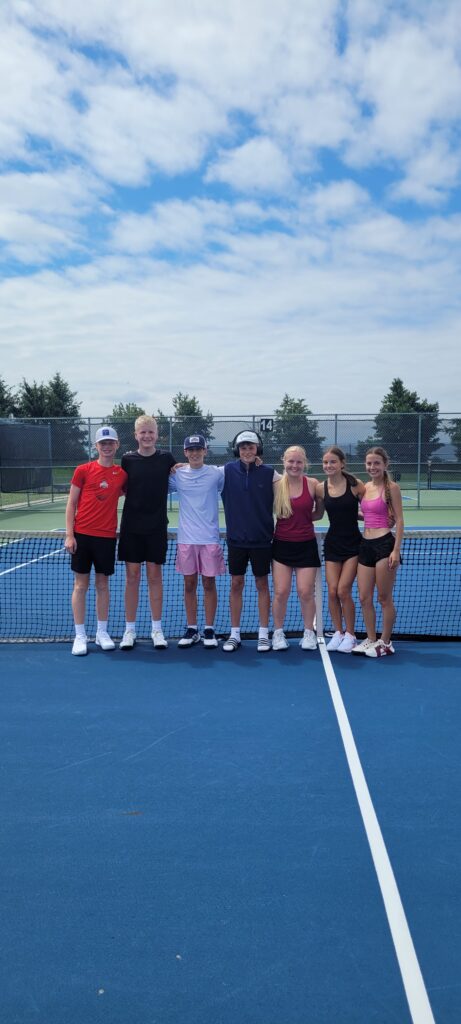
- Team Kiss My Ace
-
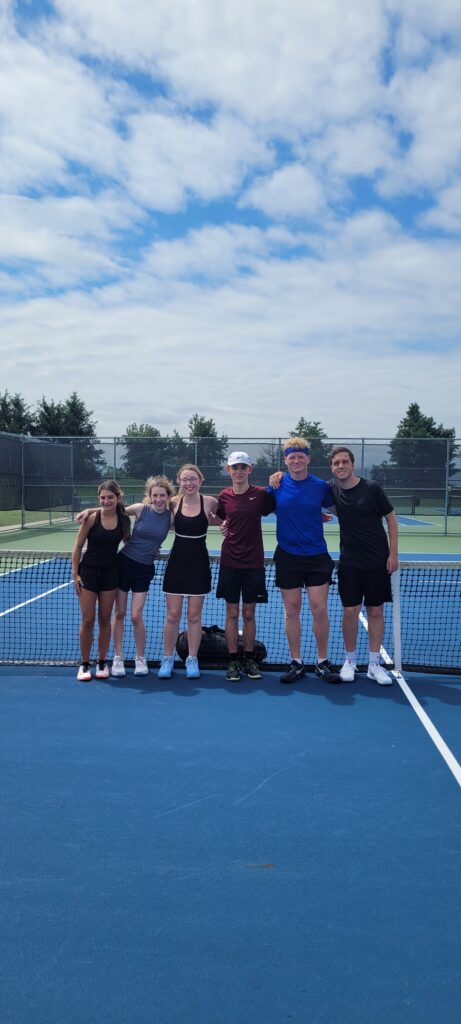
- Team HNOT
-
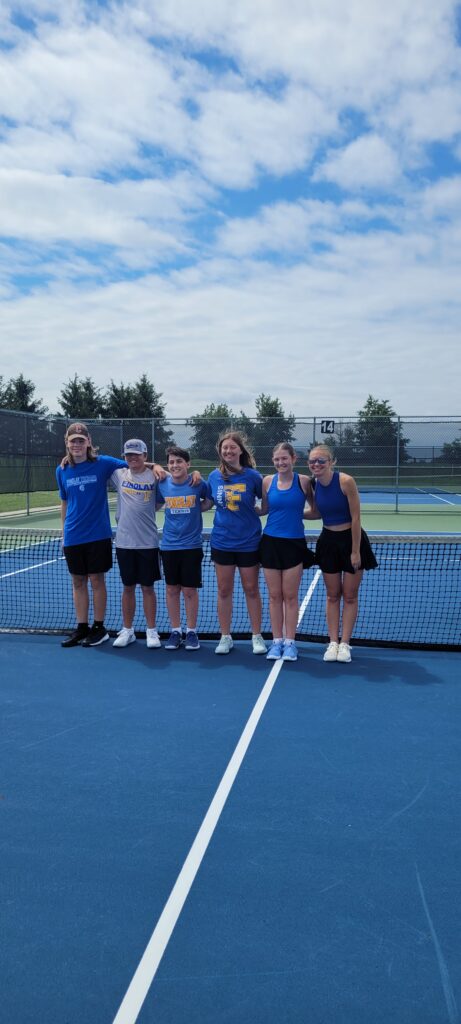
- Team Findlay
-
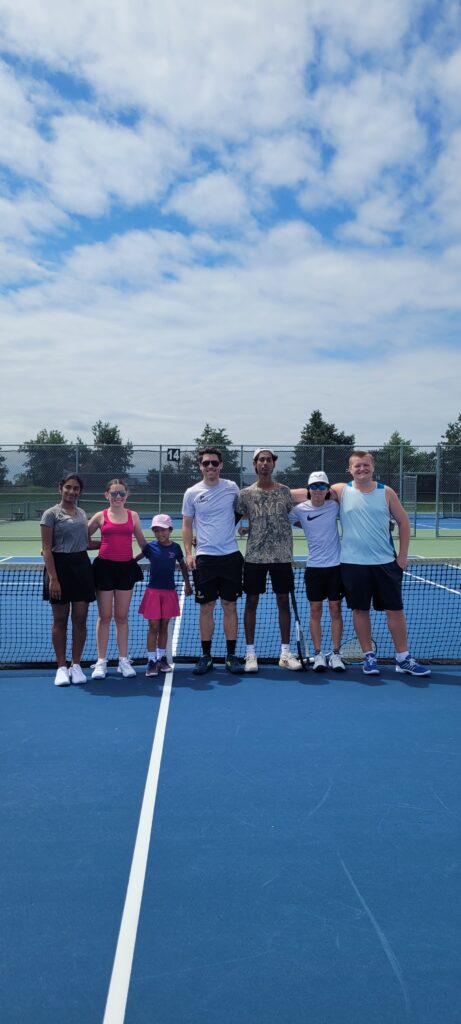
- Team Gladiators
-
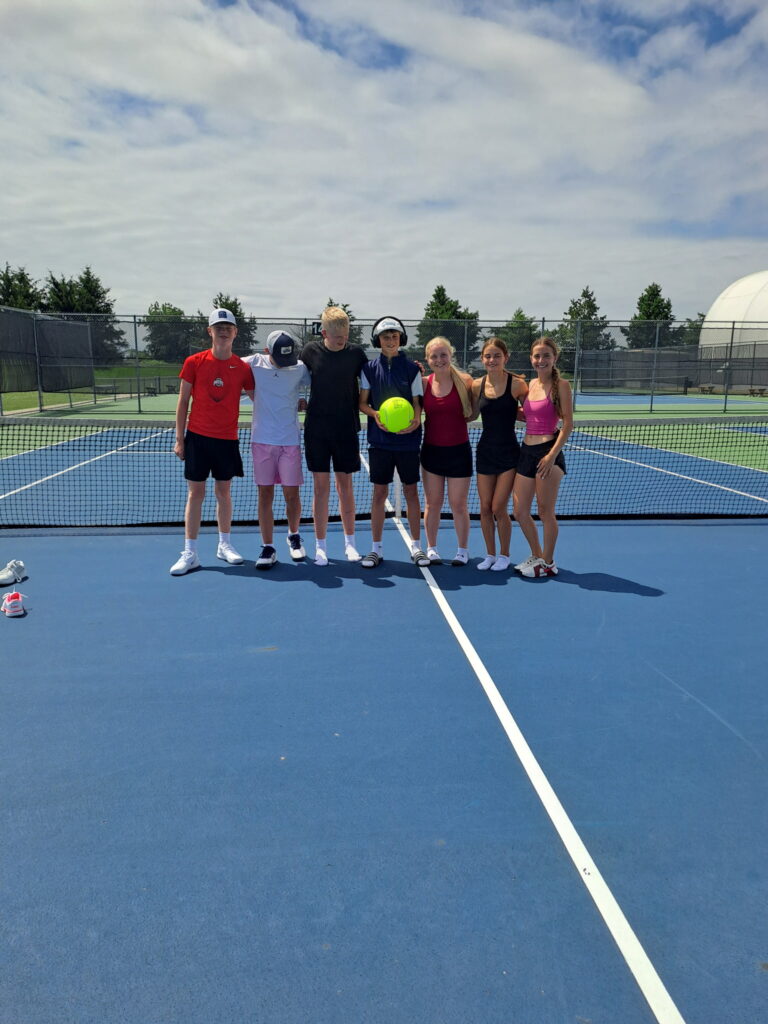
- Team Kiss My Ace with Champions Ball
-
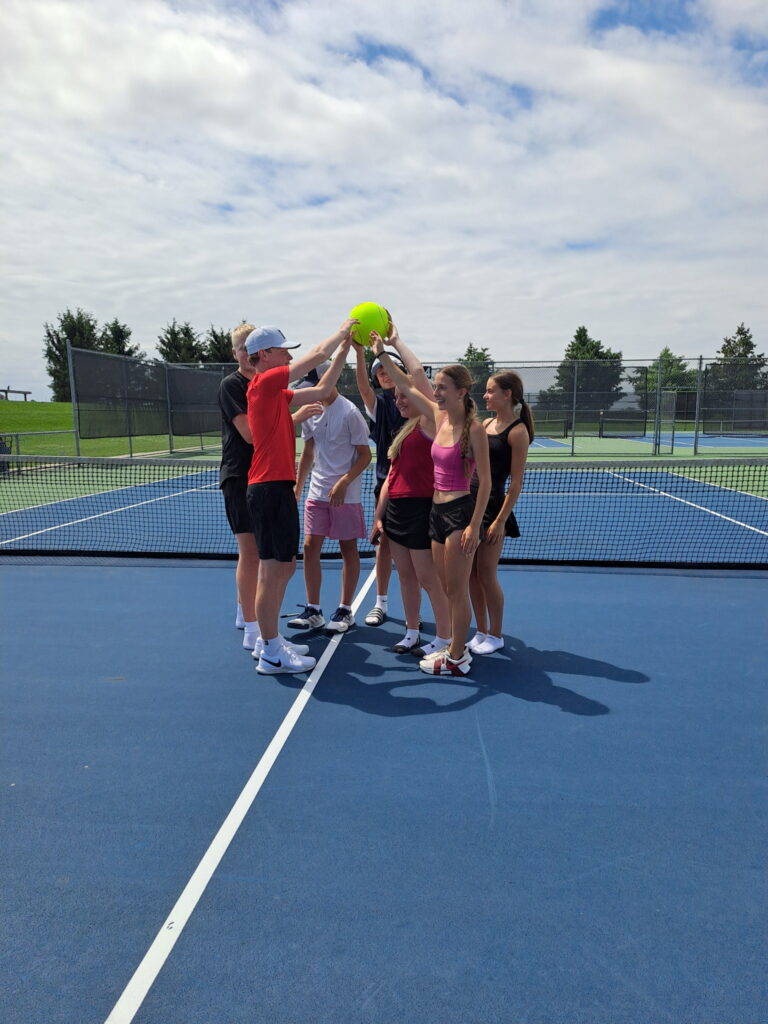
- Team Kiss My Ace with Champions Ball
-
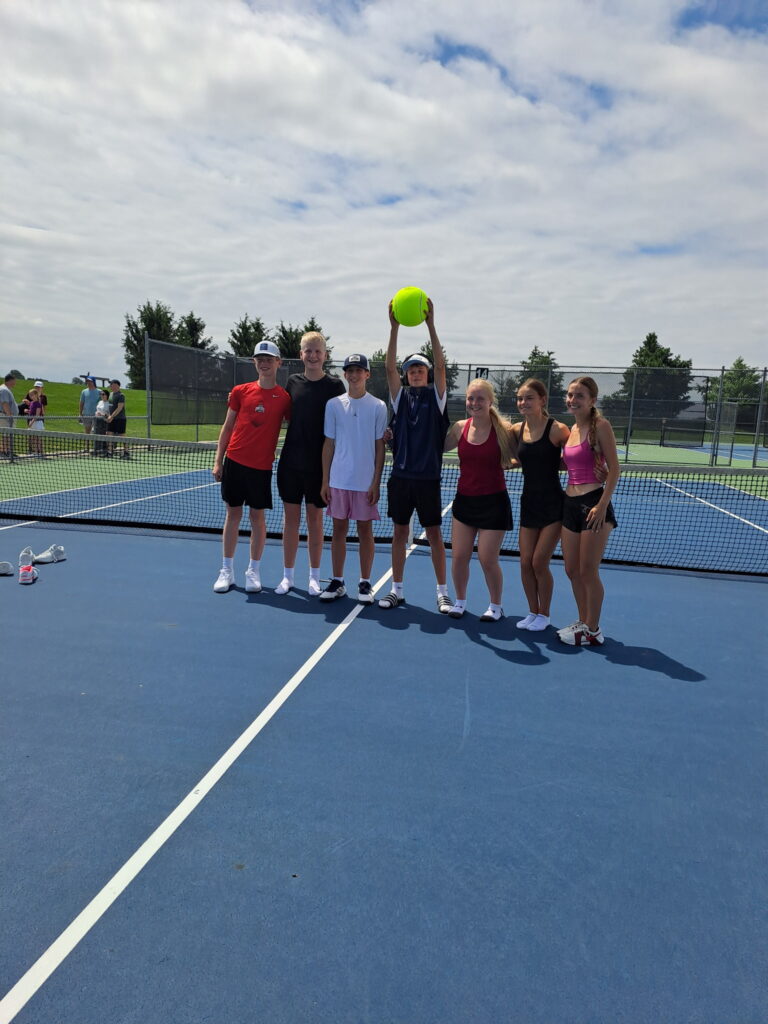
- Team Kiss My Ace with Champions Ball
-
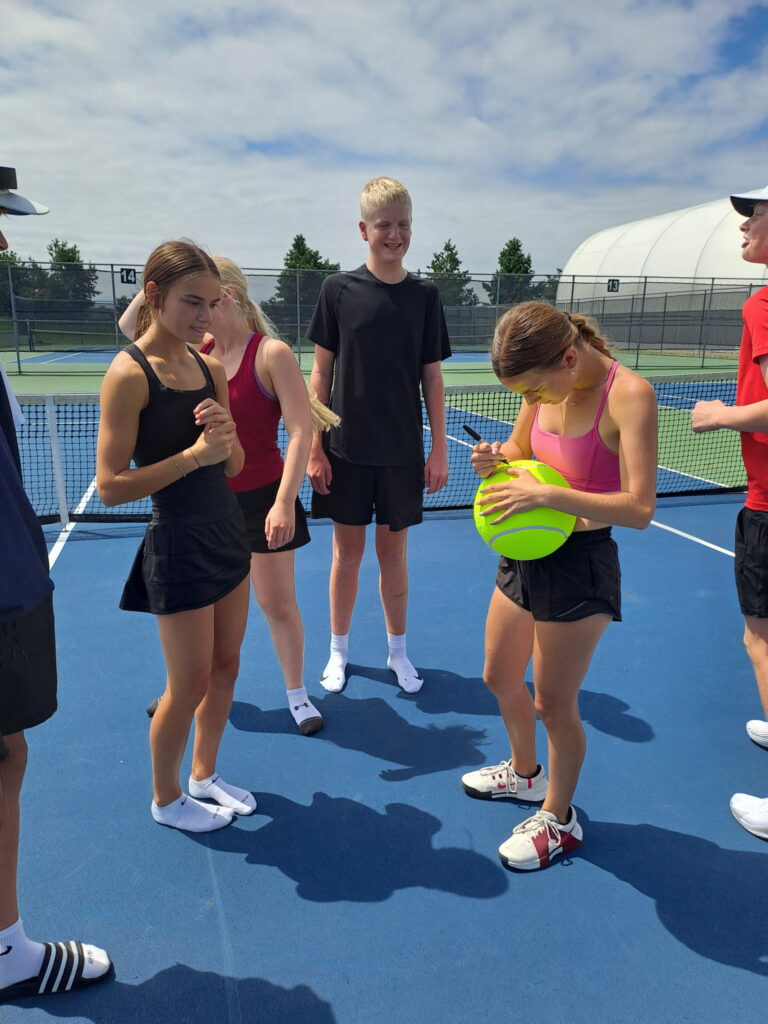
- Team Kiss My Ace signing Champions Ball
-
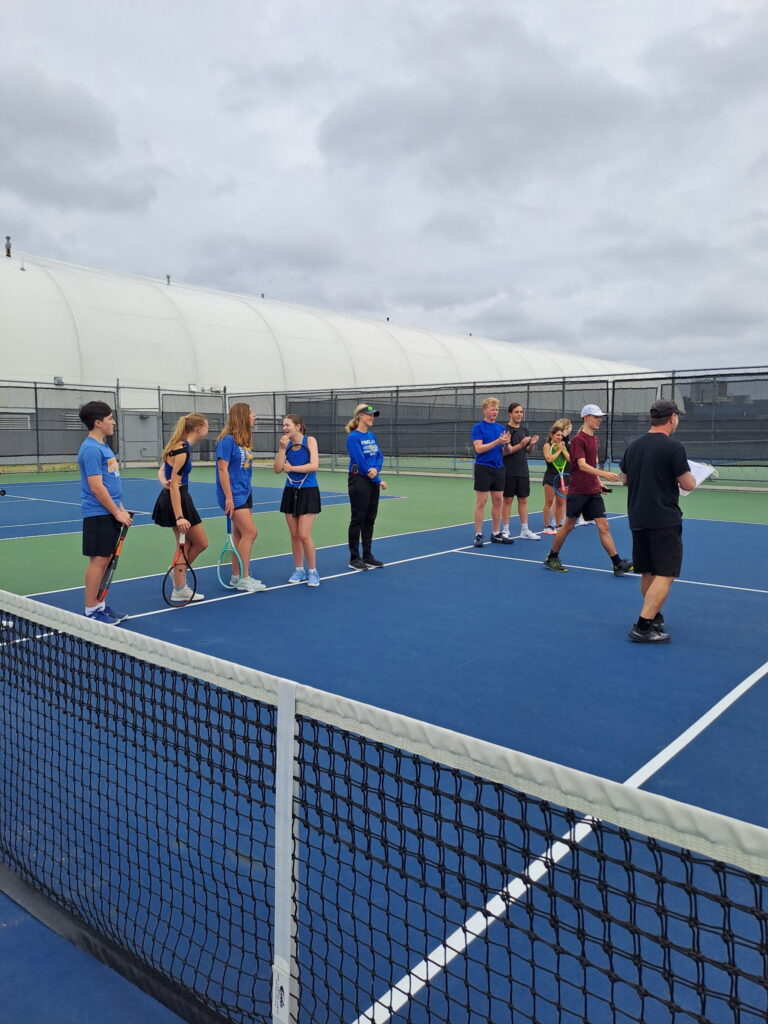
- Announcing the team and lineups
-
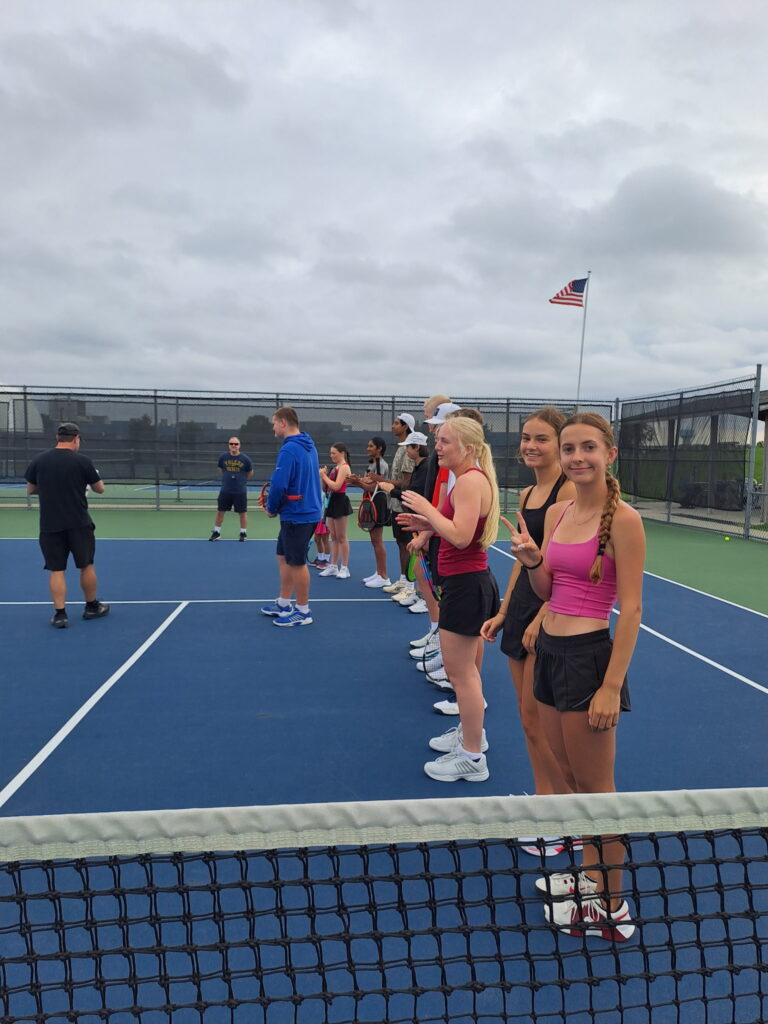
- Announcing the team and lineups
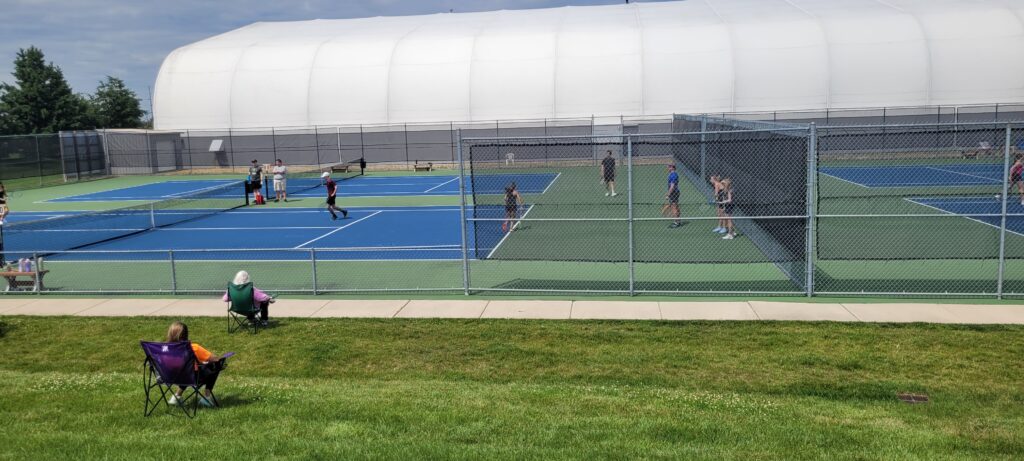
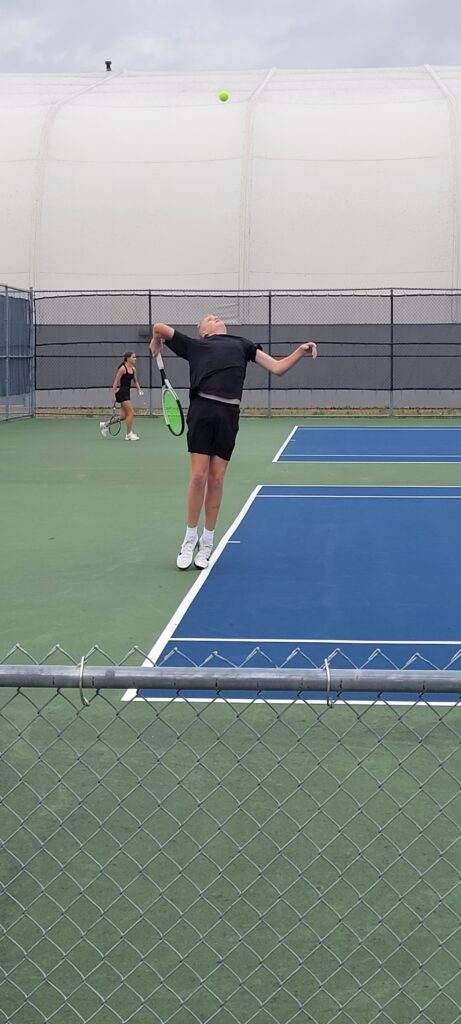
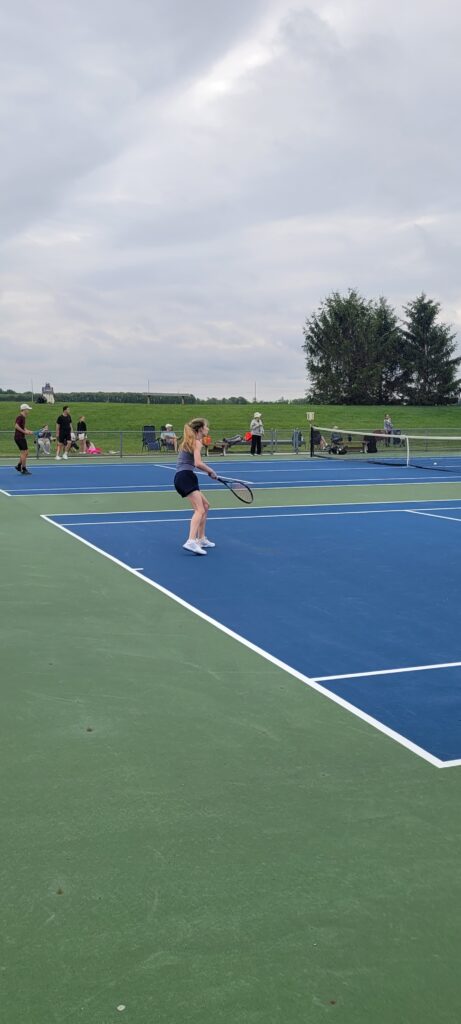
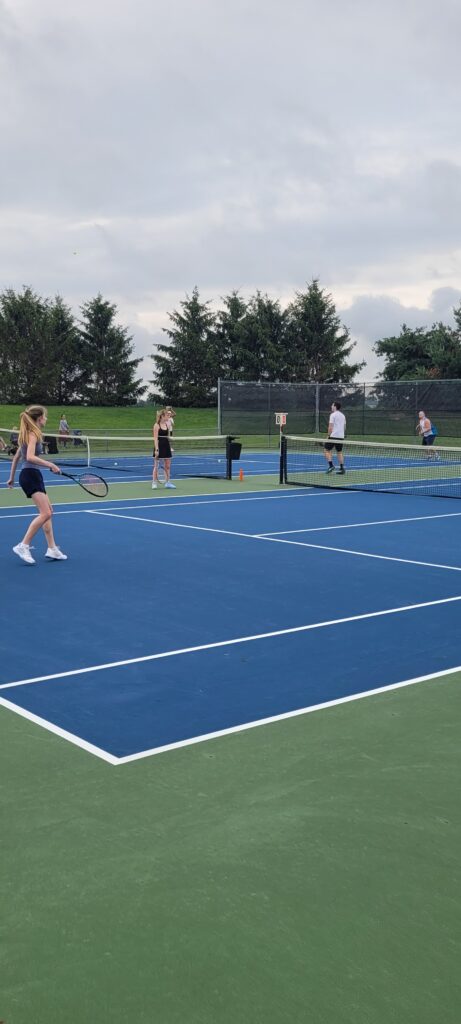
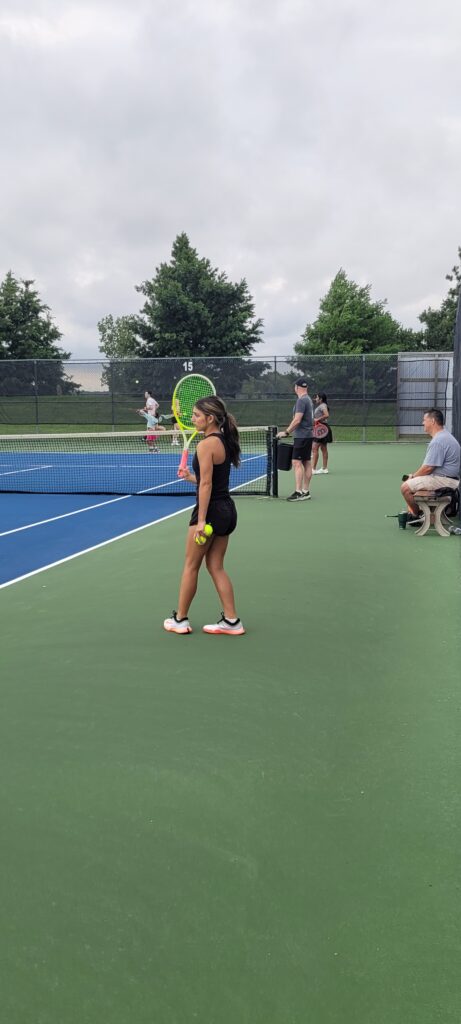
Year One by the Numbers
- 4 Teams
- 24 Players
- 9 BOLTs per dual
- 3 Round-Robin Rounds
- 12-point margin between 1st and 2nd place
- Approximately $191 in operating expenses
- 1 Championship Ball
- Countless memories
See you next year!

This playbook is shared freely in the spirit of coaches helping coaches. If you adapt any of these ideas for your own program, I’d love to hear what worked and what you learned so we can continue improving this resource for the tennis community.
About the Author
Patrick Giammarco is the Head Boys Tennis Coach at Perrysburg High School, Secretary of the Ohio Tennis Coaches Association (OTCA), founder of Tennis Fix System™, and a lifelong student of coaching, player development, leadership, and growing the game of tennis.