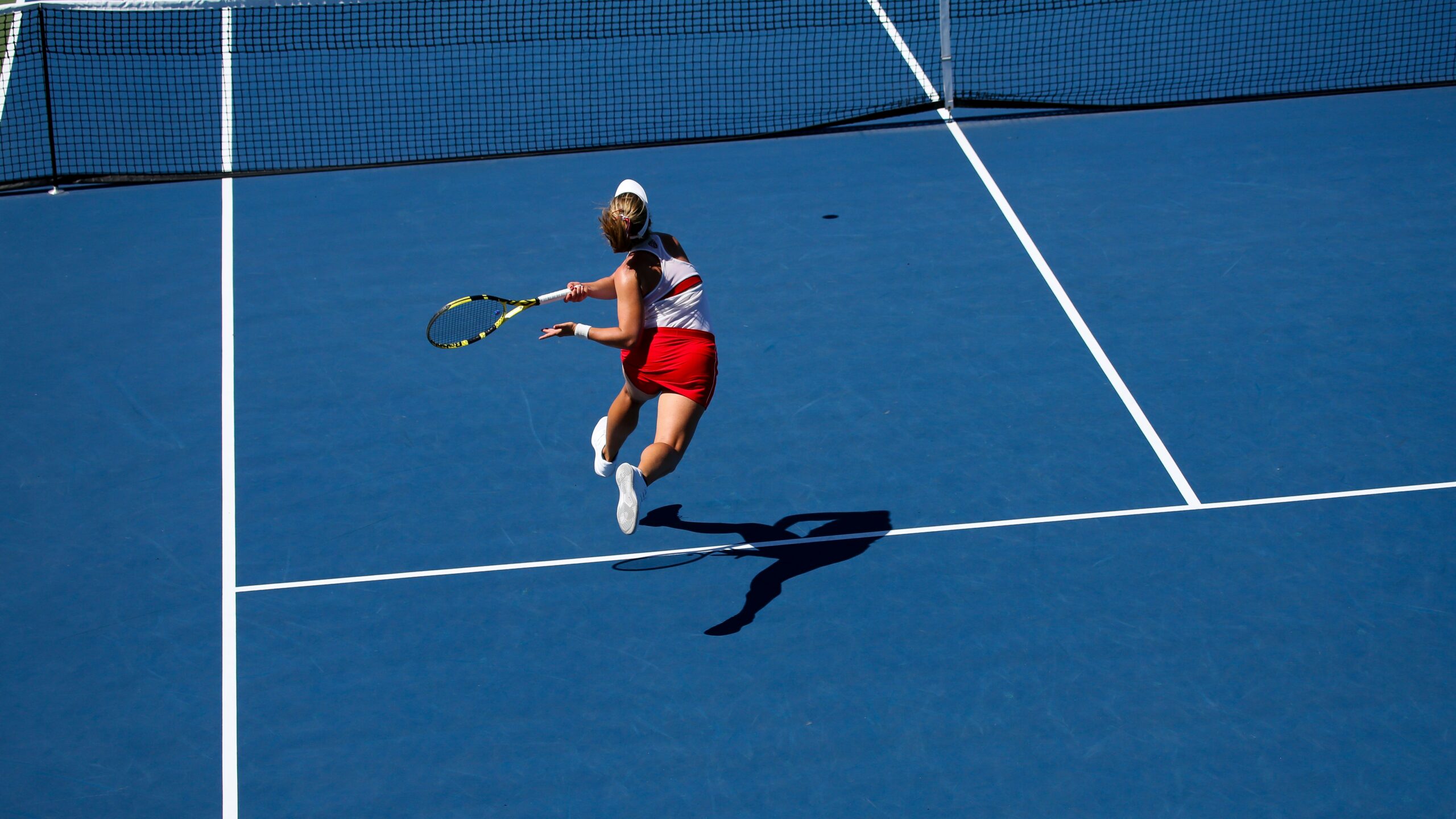
Movement Physicality: Why Better Movers Win More Matches
Part 2 of the Tennis Fix series: The Five Dimensions of Tennis Physicality
What if the difference between winning and losing a tennis match has less to do with how well you hit the ball and more to do with how well you move before and after hitting it?
After spending time courtside watching Division I women’s tennis, I’ve become increasingly convinced that movement is one of the most important, yet often overlooked, aspects of competitive tennis.
At that level, nearly everyone can hit a quality forehand, backhand, and serve. But not everyone moves with the same efficiency, balance, or purpose.
And when two talented players compete, those differences become obvious.
One player consistently arrives balanced and ready to hit. The other arrives late, reaches for balls, or struggles to recover. One seems to have more time. The other constantly looks rushed.
That’s movement physicality.
And it’s the first of what I’ve identified as the Five Dimensions of Tennis Physicality.
RELATED ARTICLE: The Secret Weapon Nobody Talks About in Junior Tennis: Physicality
Movement Isn’t Just About Being Fast
Ask a junior tennis player what makes someone a good mover, and they’ll probably say speed.
But speed alone doesn’t make someone an effective tennis player.
I’ve watched incredibly quick players struggle to get into position. I’ve also watched players who aren’t necessarily the fastest consistently arrive early, maintain their balance, and recover efficiently.
What’s the difference?
The better mover understands how to organize their body.
They establish a stable foundation, control their center of mass, absorb incoming force, produce force in a new direction, and recover to do it again.
Movement isn’t simply getting from Point A to Point B.
It’s getting there in a position that allows you to hit a quality shot and prepare for the next one.
The best movers don’t just cover the court. They control their bodies while covering it.
Why Balance May Be More Important Than Speed
Think about what happens when a player gets pulled wide to their forehand.
They sprint toward the ball, reach it, and make contact.
Success, right?
Not necessarily.
What happens next?
If they’re off balance, their momentum may continue carrying them toward the doubles alley. Their recovery is delayed, and their opponent suddenly has an open court.
Now imagine another player reaching that same ball.
They establish a stable outside leg, control their momentum, maintain their posture, and begin recovering efficiently.
Both players reached the ball.
But only one was physically prepared for what happened next.
That’s an enormous difference.
In tennis, movement doesn’t end when you reach the ball. It ends when you’re prepared for the next one.
RELATED ARTICLE: Tennis Footwork and Force Management Training
Force Management: The Missing Link in Better Movement
This is one of the reasons I developed the Tennis Fix Force Management™ training program.
During our initial five-week pilot, something became clear almost immediately.
Even talented junior players struggled with basic movement challenges.
Single-leg balance.
Landing mechanics.
Controlling their center of mass.
Maintaining posture when outside force was applied.
Absorbing force before changing direction.
These weren’t necessarily players who looked slow during regular tennis practice. Many were accomplished high school competitors.
But when we isolated movement from stroke production, weaknesses became easier to identify.
Our training emphasized five connected actions:
- Establish: Create a stable foundation.
- Organize: Control your center of mass.
- Absorb: Manage incoming force and decelerate.
- Produce: Generate force to move in the next direction.
- Recover: Reorganize and prepare to repeat the sequence.
We used gravity belts, mini hurdles, aerobic steps, medicine balls, and battle ropes to challenge those abilities.
The equipment wasn’t the point.
The movement was.
By the end of the program, several players who initially struggled with single-leg hurdle jumps demonstrated noticeably better control and balance.
That was encouraging because it reinforced something I’ve believed for a long time.
Better movement can be trained. It doesn’t have to be left to chance.
Better Movement Creates Better Shots
Here’s where movement physicality becomes especially important.
Poor movement often creates what looks like poor stroke technique.
A player arrives late and opens their racket face.
They lose balance and pull off the ball.
They reach instead of moving their feet.
They swing harder because their body isn’t properly positioned to generate force.
A coach might immediately correct the stroke.
But what if the stroke isn’t the primary problem?
What if the player’s movement created the problem before the swing ever began?
This is the idea behind Force Before Form, a concept I’ve been developing around the relationship between movement and stroke production.
When players arrive balanced and organized, they give themselves a better opportunity to execute the technique they’ve already learned.
Sometimes improving a player’s shot doesn’t begin with changing the swing.
It begins with changing how they move.
RELATED ARTICLE: Why Better Tennis Starts Before the Swing
The Recovery Advantage: Why the Next Shot Matters More Than the Last
Watch high-level tennis and pay particular attention to what players do immediately after contact.
The best movers don’t admire their shots.
They’re already preparing for what’s next.
They recognize where their shot is likely to go, anticipate the opponent’s response, and begin reorganizing their body.
That doesn’t mean blindly sprinting back to the middle after every shot. Effective recovery depends on court geometry, shot quality, opponent position, and the likely return.
A player who hits a deep, aggressive crosscourt forehand may recover differently than one who floats a defensive ball from the same position.
Good movers understand that distinction.
They don’t just move quickly.
They move intelligently.
And over the course of a match, that efficiency matters.
Fewer unnecessary steps.
Better court coverage.
More balanced contact points.
Less wasted energy.
More opportunities to dictate play.
Movement Physicality Is Also About Applying Pressure
There’s another dimension to movement that doesn’t receive enough attention.
Better movement doesn’t just help you defend.
It helps you become more offensive.
A player who recovers efficiently can hold better court position, step inside the baseline, take time away from an opponent, and attack shorter balls.
They can turn neutral situations into offensive opportunities.
And perhaps most importantly, they make their opponent feel like they have to hit a better shot to win the point.
Think about the player who seems to get everything back.
Eventually, opponents start pressing.
They aim closer to the lines.
They swing harder.
They attempt lower-percentage shots.
That’s movement physicality influencing the match without necessarily producing a winner.
How Can Junior Players Develop Movement Physicality?
The good news is that improving movement doesn’t require expensive equipment or an elaborate training facility.
It requires intentional practice.
Start by incorporating movement challenges that emphasize:
- Single-leg balance and controlled landings
- Deceleration before changing direction
- Lateral movement and crossover recovery
- Maintaining posture while moving
- Reacting to unpredictable directions
- Recovering to an appropriate court position after every shot
Most importantly, connect those skills to actual tennis situations.
Don’t just run through a ladder faster.
Ask whether the player can stop, organize, redirect, and recover more effectively.
Don’t simply count how many hurdles they clear.
Watch how they land.
Don’t just praise a player for reaching a difficult ball.
Evaluate what position they’re in afterward.
Movement quality matters more than simply completing the drill.
Common Questions About Movement Physicality in Tennis
Q. What is movement physicality in tennis?
A. Movement physicality is a player’s ability to move efficiently, maintain balance, control momentum, change direction, and recover throughout a tennis point. It combines physical abilities such as strength and coordination with anticipation, court awareness, and movement decisions.
Q. Why do better movers win more tennis matches?
A. Better movers often reach more balls in balanced positions, execute more consistent strokes, recover efficiently, and maintain better court position. These advantages can help them extend rallies, create offensive opportunities, and force opponents into more difficult shots.
Q. How can I improve my movement on the tennis court?
A. Start by developing single-leg balance, lower-body strength, controlled deceleration, lateral movement, and recovery skills. Incorporate tennis-specific drills that require you to react, change direction, and regain an effective position after hitting.
Q. Why do I feel slow on the tennis court even though I’m fast?
A. Straight-line speed doesn’t automatically translate into efficient tennis movement. Poor anticipation, inefficient first steps, weak deceleration, balance problems, or unnecessary recovery steps can make an otherwise fast athlete feel slow during points.
Q. Why is balance important when hitting a tennis ball?
A. Balance helps players maintain posture, control their racket path, transfer force efficiently, and recover after contact. Players who frequently lose balance may struggle with consistency even when their stroke mechanics are otherwise sound.
Q. What’s the difference between footwork training and movement training in tennis?
A. Footwork training typically emphasizes stepping patterns, positioning, and coordination. Movement training takes a broader approach by developing balance, center-of-mass control, force absorption, acceleration, deceleration, and recovery. Both are important, but efficient footwork depends on the body’s ability to manage movement.
Q. Can better movement improve my tennis without changing my strokes?
A. Yes. Better movement can help players arrive earlier, establish more stable hitting positions, and recover more efficiently. This may improve shot consistency and execution without requiring major changes to stroke mechanics.
Move Better, Play Better
The next time you watch a tennis match, don’t just watch the ball.
Watch the player.
Notice who arrives balanced.
Who controls their momentum.
Who changes direction efficiently.
Who recovers first.
Who consistently puts themselves in position to hit the next shot.
You’ll begin to see that the best movers aren’t necessarily the players taking the most steps or moving at the highest speed.
They’re the players who make movement look purposeful.
And when movement becomes more efficient, everything else has a better chance of falling into place.
Because better tennis doesn’t always begin with a better swing. Sometimes it begins with better movement.
Want to Develop Better Movement Physicality?
Movement is the foundation of physicality, and it’s a skill that can be developed with purposeful training.
The Tennis Fix Force Management™ Performance Lab helps players build better balance, improve movement control, manage force, and recover more efficiently.
Move Better. Stay Balanced. Play Your Best.
Learn More About Tennis Fix Force Management™
Coming Next in The Five Dimensions of Tennis Physicality
Part 3: Ball Physicality — What Makes a Ball Feel “Heavy”?
Why do some opponents hit balls that feel so much harder to handle, even when they’re not swinging faster?
Next, we’ll explore how spin, depth, trajectory, pace, and court position combine to create a ball that puts opponents under constant pressure.
Because physicality isn’t just about how you move.
It’s also about what your ball makes your opponent do.